Best Ecommerce Order Management System Features

İçindekiler

Paylaş


The best ecommerce order management system features to look for
1. Multi-channel order capture and centralized order visibility
At a minimum, an OMS should unify orders from multiple channels into one operational environment.
This is foundational to multi-channel order management . Without it, teams end up switching between platforms to check statuses, handle exceptions, and coordinate fulfillment.
A strong feature set should support:
- Order ingestion from marketplaces, webstores, social channels, and retail sources
- Consistent order normalization across channels
- A centralized order view for operations and support teams
- Easy filtering and search across orders, statuses, and channels
This matters because fragmented order data slows response times and increases operational confusion. Centralized visibility gives teams a shared source of truth.
2. Real-time inventory visibility across channels and locations
Inventory visibility is one of the most important ecommerce order management system features because order quality depends on stock accuracy.
An OMS should help teams see inventory across warehouses, stores, fulfillment centers, and sales channels with enough freshness to support confident decisions.
Look for support for:
- Real-time or near-real-time stock updates
- Multi-location inventory visibility
- Available, reserved, and allocated inventory states
- Inventory synchronization across channels
- Buffer stock or safety stock controls
This is where inventory visibility ecommerce becomes a competitive advantage. It helps reduce overselling, improve promise accuracy, and support better allocation.
3. Automated order routing
Routing is where an OMS moves from being a tracker to being a decision engine.
Order routing automation allows businesses to direct orders based on logic such as inventory availability, delivery destination, warehouse capacity, shipping rules, or service-level priorities.
The strongest routing features support:
- Rules-based fulfillment node selection
- Geographic routing
- Cost-based routing
- Inventory-priority routing
- Channel- or service-specific routing logic
- Fallback rules when preferred nodes are unavailable
This feature is especially important for businesses with multiple warehouses or more than one fulfillment option. Smarter routing improves speed and reduces unnecessary shipping costs.
4. Order processing automation
One of the clearest sources of ROI in an OMS is reduced manual work.
Order processing automation helps move orders through operational steps without requiring constant human intervention. That can improve speed, consistency, and throughput.
This often includes:
- Automatic status transitions
- Trigger-based workflow actions
- Auto-approval or release logic
- Fraud or hold rules
- Batch processing support
- Notification triggers for internal teams or customers
When done well, automation reduces repetitive work and helps teams focus on exceptions rather than routine handling.
5. Fulfillment orchestration across warehouses and partners
A modern OMS should help coordinate fulfillment across internal warehouses, dark stores, retail locations, 3PLs, and shipping partners.
This is central to ecommerce fulfillment optimization . It ensures the business is not just processing orders, but fulfilling them through the most practical path.
Useful features include:
- Multi-warehouse allocation support
- Split shipment handling
- Partial fulfillment control
- Fulfillment status synchronization
- External warehouse or 3PL workflow support
- Service-level prioritization
As fulfillment models become more distributed, this capability becomes more valuable.
6. Shipment tracking and status visibility
Customers and internal teams both need accurate, timely order progress updates.
A good OMS should make shipment tracking easier by consolidating shipment status signals and exposing them clearly to operations teams, customer support, and downstream systems.
This typically includes:
- Shipment creation and tracking references
- Consolidated status visibility
- In-transit updates
- Delivery confirmation
- Delay or exception flags
- Channel or customer-facing update support
This is not just a convenience feature. Better visibility improves trust, reduces inbound support queries, and helps teams act earlier on delayed deliveries.
7. Exception management and operational controls
Not every order follows the ideal path. A good OMS should help teams manage the messy part of operations without losing control.
This feature area is often overlooked during evaluation, but it matters because exceptions are where operational quality becomes visible.
Strong platforms should support handling for:
- Payment or approval holds
- Inventory mismatches
- Routing failures
- Fulfillment delays
- Shipment exceptions
- Manual overrides with traceability
- Retry or fallback workflows
This is especially relevant for brands with complex ecommerce logistics management needs. Without strong exception handling, even good automation can break down under real-world conditions.
8. Returns and cancellation workflow support
Returns and cancellations are not edge cases in e-commerce. They are part of the operating model.
An OMS should help manage those workflows cleanly, especially when brands sell across different channels with different rules and timelines.
Look for features such as:
- Full and partial cancellation support
- Return request visibility
- Return status tracking
- Inventory restock coordination
- Return reason capture
- Workflow alignment with channel policies
A strong cancellation and return process supports both customer experience and internal accuracy.
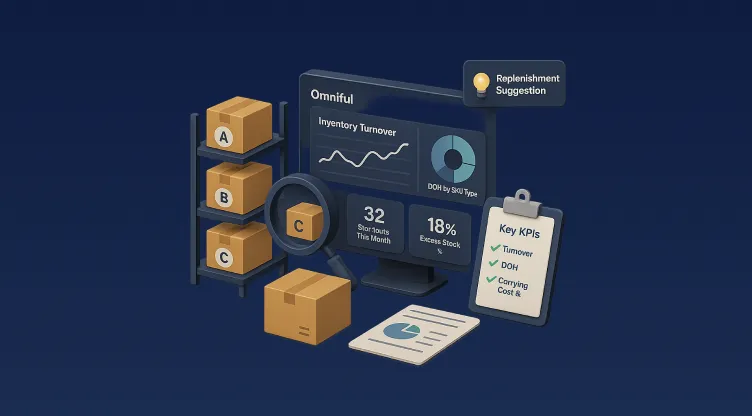
9. Reporting and analytics dashboards
A well-designed OMS should help teams improve operations, not just observe them.
That means reporting should go beyond basic order counts. Strong dashboards support better decisions around fulfillment performance, inventory health, and process bottlenecks.
Useful reporting capabilities include:
- Order volume by channel
- Fulfillment speed and SLA visibility
- Delay and exception trends
- Cancellation and return analysis
- Inventory availability insights
- Warehouse or node performance views
- Export or BI integration support
These insights help teams identify where operations are slowing down and where process changes could produce measurable gains.
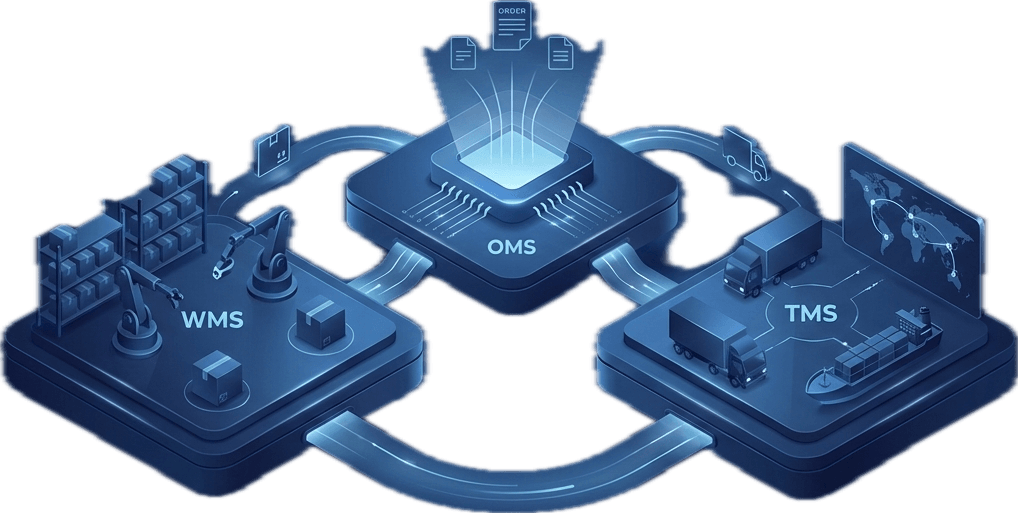
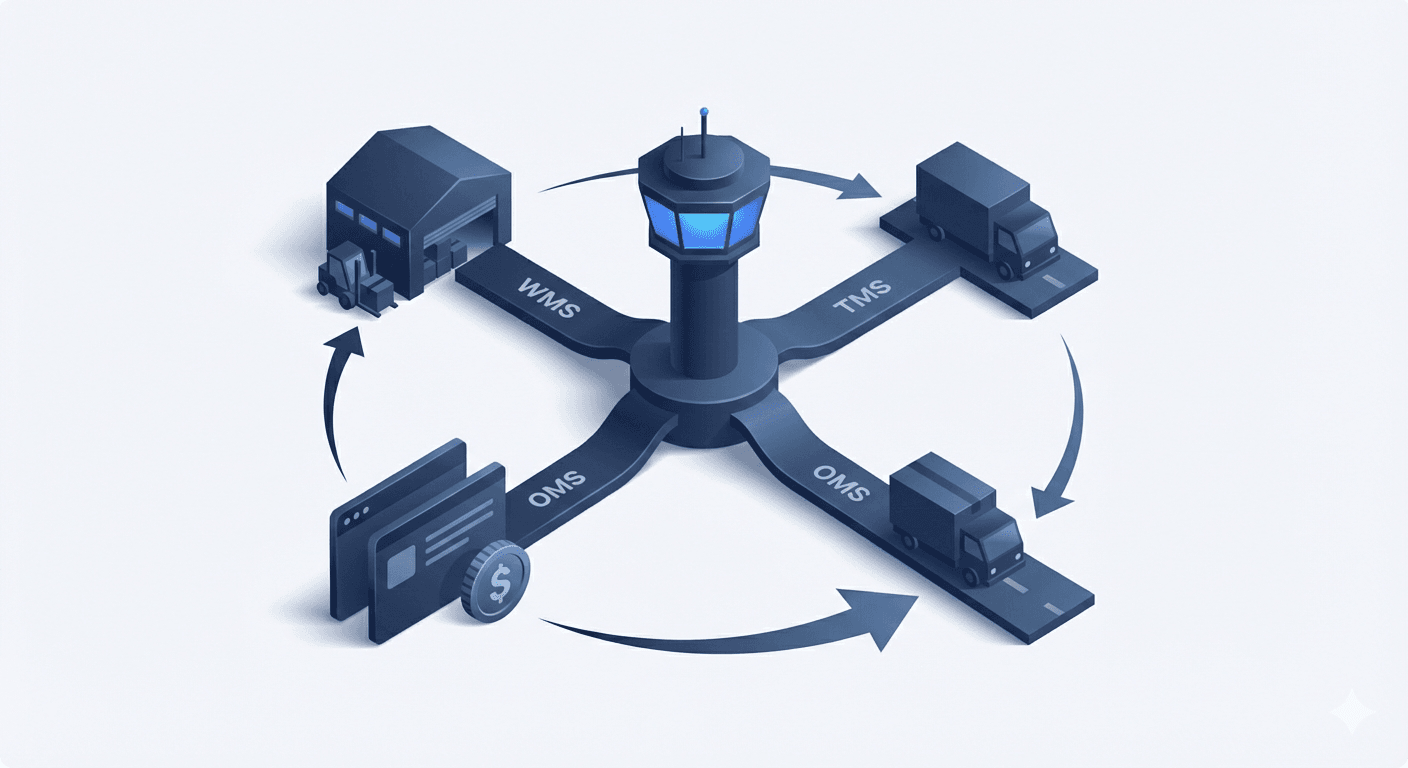
10. Integrations with ecommerce, warehouse, and logistics systems
An OMS does not operate alone. It sits inside a broader commerce stack.
That is why integration quality is one of the most important ecommerce order management system features to evaluate. A platform is only as useful as its ability to connect with the systems your business already depends on.
This often includes integration with:
- Ecommerce storefronts
- Online marketplaces
- ERP systems
- WMS platforms
- Shipping carriers and aggregators
- CRM and support platforms
- Finance or invoicing systems
This is also where omnichannel order management becomes practical. Without strong integrations, omnichannel visibility remains incomplete.
11. Scalability, reliability, and performance
Feature depth is important, but so is stability.
As order volume grows, the OMS needs to support more users, more transactions, more channels, and more workflow complexity without degrading performance.
Assess whether the platform can support:
- High order throughput
- Peak event readiness
- Stable status synchronization
- Workflow reliability during volume spikes
- Role-based user growth
- Ongoing operational expansion
For growing brands, scalability is not a future concern. It is often a present selection criterion disguised as a future need.
12. User permissions, governance, and operational usability
Even a feature-rich OMS can fail if the system is hard to use or too loosely controlled.
Operational teams need interfaces that are clear and efficient. Leadership and IT teams need governance controls that reduce risk.
Key areas to evaluate:
- Role-based permissions
- Audit history or action traceability
- Clear dashboards and navigation
- Fast search and filters
- Bulk actions
- Ease of onboarding new users
- Operational clarity for non-technical teams
These features affect adoption, accountability, and day-to-day execution more than many buyers initially expect.
Which features matter most by business stage
Not every feature matters equally to every business. Priorities depend on operational maturity and growth stage.
Early-stage brands
Brands with simpler operations usually benefit most from:
- Multi-channel order capture
- Centralized visibility
- Basic inventory synchronization
- Shipment tracking
- Core reporting
At this stage, the goal is often reducing fragmentation and creating a reliable baseline.
Growing multi-channel brands
As order volume and complexity rise, priorities often shift toward:
- Automated order routing
- Advanced inventory visibility
- Fulfillment orchestration
- Exception management
- Stronger integration support
- Order processing automation
This is usually the stage where manual workflows start becoming expensive.
Large or operationally complex businesses
More complex businesses often need:
- Deep multi-node orchestration
- Flexible routing logic
- Role-based governance
- Advanced reporting and BI access
- More extensive integration architecture
- High reliability and performance controls
At this level, the OMS becomes a core operating platform rather than a supporting tool.
Common mistakes when evaluating OMS features
Many teams evaluate OMS features by asking what sounds useful instead of what solves their actual operational bottlenecks.
Common mistakes include:
- Prioritizing long feature lists over workflow fit
- Underestimating integration depth
- Ignoring exception handling
- Treating reporting as an afterthought
- Choosing for current simplicity only
- Failing to involve operations, support, and IT teams together
A better evaluation approach is to map your order flow first, identify failure points, and then judge feature importance against those realities.
How to prioritize OMS features for your business
A simple way to prioritize is to separate features into three groups.
Core control features
These are essential for daily order execution:
- Order capture
- Centralized order visibility
- Inventory visibility
- Shipment and status tracking
Efficiency features
These improve operational performance:
- Order routing automation
- Order processing automation
- Fulfillment orchestration
- Exception handling
Scale and governance features
These support sustainable growth:
- Integrations
- Reporting and analytics
- Permissions and auditability
- Reliability and performance
This helps buyers evaluate a platform not just by what it can do, but by what it helps the business improve first.
Final thoughts on ecommerce order management system features
The best ecommerce order management system features are the ones that reduce operational friction, improve fulfillment quality, and support the next stage of growth.
For some brands, that starts with centralized visibility and cleaner inventory coordination. For others, it means deeper order routing automation , better exception handling, and stronger omnichannel execution. The right priorities depend on channel complexity, fulfillment setup, and the cost of current inefficiencies.
What matters most is choosing an OMS based on how your business actually runs. A strong order management system for ecommerce should not just help teams keep up with order volume. It should help them work with more accuracy, more speed, and more control.
If your brand is evaluating platforms in 2026, focus less on surface-level feature quantity and more on whether the system supports reliable multi-channel order management , scalable fulfillment, and real operational clarity. That is where long-term value comes from.
FAQs
What are the best ecommerce order management system features?
The best features usually include real-time inventory visibility, automated order routing, centralized multi-channel order management, fulfillment tracking, reporting dashboards, and integration with warehouse and logistics systems.
Why do modern retail brands need an OMS?
Modern retail brands need an OMS to manage orders across multiple channels, improve fulfillment speed, reduce manual work, and maintain better visibility across inventory and delivery operations.
How does an OMS improve ecommerce operations?
An OMS improves ecommerce operations by automating order processing, coordinating inventory across channels, routing orders more intelligently, and giving teams better visibility into fulfillment performance and exceptions.
What is multi-channel order management?
Multi-channel order management is the ability to manage orders from websites, marketplaces, retail channels, and other sales sources in one centralized system, instead of handling each source separately.
How do OMS features improve customer experience?
OMS features improve customer experience by reducing fulfillment delays, improving order accuracy, enabling better shipment tracking, and helping businesses deliver more consistent service across channels.
What features should brands prioritize first in an ecommerce OMS?
Brands should usually prioritize centralized order visibility, inventory visibility, core integrations, shipment tracking, and routing automation first. The right order depends on operational complexity and growth stage.
Paylaş