How to Choose the Right Warehouse Management System

İçindekiler

Paylaş


How to Choose the Right Warehouse Management System
Summary
Choosing the right Warehouse Management System (WMS) is one of the most critical decisions for improving warehouse operations, inventory accuracy, and fulfillment efficiency. A well-selected WMS enables businesses to streamline workflows, reduce errors, and scale operations as demand grows.
In 2026, warehouses are becoming more complex, handling multi-channel orders, high SKU volumes, and fast delivery expectations. Selecting the wrong system can lead to inefficiencies, poor visibility, and operational bottlenecks.
This guide explains how to choose a warehouse management system based on your business needs, operational complexity, scalability requirements, and integration capabilities. You’ll learn the key features to evaluate, common mistakes to avoid, and best practices to ensure long-term success.
Content
What is a Warehouse Management System
A Warehouse Management System (WMS) is software designed to manage and optimize warehouse operations, including:
- Inventory tracking
- Receiving and putaway
- Picking and packing
- Order fulfillment
- Shipping coordination
A WMS acts as the operational backbone of warehouse processes, ensuring that inventory is accurate and workflows are efficient.
Core Functions of a WMS
| Function | Description |
|---|---|
| Inventory Management | Real-time stock tracking |
| Order Fulfillment | Picking, packing, and dispatch |
| Warehouse Optimization | Efficient storage and movement |
| Reporting & Analytics | Operational insights |
Why Choosing the Right Warehouse Management System Matters
Selecting the right WMS directly impacts:
- Fulfillment speed
- Inventory accuracy
- Operational efficiency
- Customer satisfaction
Challenges of Choosing the Wrong WMS
- Poor system scalability
- Limited integration capabilities
- Inefficient workflows
- Lack of real-time visibility
- Increased operational costs
Benefits of the Right WMS
| Benefit | Impact |
|---|---|
| Improved Inventory Accuracy | Reduced stock discrepancies |
| Faster Order Fulfillment | Better delivery performance |
| Enhanced Visibility | Real-time insights |
| Scalability | Supports business growth |
Key Factors to Consider When Choosing a Warehouse Management System
1. Business Requirements and Use Cases
Start by understanding your operational needs.
Ask:
- What is your order volume?
- How complex are your workflows?
- Do you handle multi-channel orders?
2. Inventory Management Capabilities
A strong WMS should provide:
- Real-time inventory tracking
- Multi-location inventory visibility
- Batch and serial tracking
- Barcode support
3. Scalability and Flexibility
Your WMS should grow with your business.
Look for:
- Support for increasing order volumes
- Multi-warehouse capabilities
- Flexible configuration
4. Integration Capabilities
A modern WMS must integrate with:
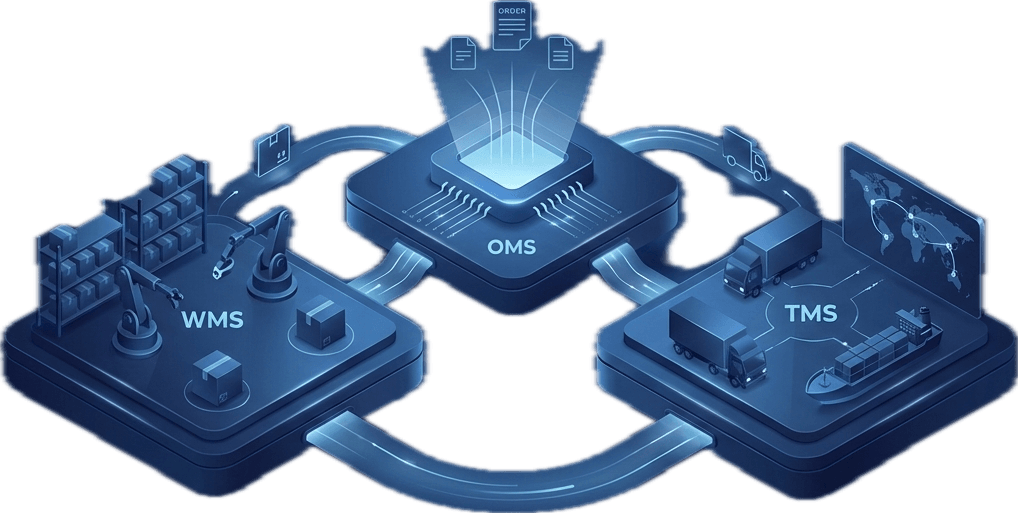
- Order Management Systems (OMS)
- Transportation systems
- Ecommerce platforms
- ERP systems
5. User Experience and Ease of Use
A complex system slows down operations.
Look for:
- Intuitive UI
- Easy onboarding
- Minimal training requirements
6. Automation and Workflow Optimization
Automation features include:
- Automated picking processes
- Smart routing
- Task assignment
These improve warehouse efficiency.
7. Reporting and Analytics
Data-driven decision-making is critical.
Look for:
- Real-time dashboards
- Performance metrics
- Custom reporting
8. Deployment Model
Choose between:
| Type | Description |
|---|---|
| Cloud-Based WMS | Scalable, accessible anywhere |
| On-Premise WMS | More control, higher maintenance |
Types of Warehouse Management Systems
1. Basic Inventory Systems
Suitable for small businesses with simple needs.
2. Standalone WMS
Dedicated warehouse management solution.
3. Integrated WMS
Part of a broader system (ERP or OMS).
4. Cloud-Based WMS
Most popular in 2026 for scalability and flexibility.
Step-by-Step Guide to Choosing the Right WMS
Step 1: Define Your Requirements
List your operational needs and challenges.
Step 2: Evaluate Current Processes
Identify inefficiencies in:
- Picking
- Inventory tracking
- Order fulfillment
Step 3: Shortlist WMS Vendors
Compare systems based on:
- Features
- Pricing
- Scalability
Step 4: Check Integration Capabilities
Ensure compatibility with existing systems.
Step 5: Request Demos
Test usability and functionality.
Step 6: Evaluate Total Cost of Ownership
Consider:
- Implementation costs
- Maintenance
- Training
Step 7: Plan Implementation
Ensure smooth onboarding and training.
Best Practices for WMS Selection
Align with Business Goals
Choose a system that supports long-term growth.
Focus on Flexibility
Avoid rigid systems that limit customization.
Prioritize Integration
Ensure seamless data flow across systems.
Choose Scalable Solutions
Your WMS should support future expansion.
Common Mistakes to Avoid
Choosing Based on Price Alone
Low-cost systems may lack essential features.
Ignoring User Experience
Complex systems reduce productivity.
Overlooking Integration Needs
Disconnected systems create inefficiencies.
Not Planning for Growth
A system that cannot scale will become obsolete.
Expert Tips for Selecting the Best WMS
Start Small, Scale Fast
Choose a system that allows gradual expansion.
Focus on Real-Time Visibility
Real-time data improves decision-making.
Leverage Automation
Automation reduces manual effort and errors.
Use Data for Continuous Improvement
Analytics help optimize operations over time.
How WMS Improves Warehouse Operations
A well-implemented WMS improves:
- Inventory accuracy
- Picking efficiency
- Order fulfillment speed
- Warehouse productivity
Example Impact
| Area | Improvement |
|---|---|
| Inventory Accuracy | Increased |
| Fulfillment Speed | Faster |
| Operational Costs | Reduced |
Conclusion
Choosing the right Warehouse Management System is essential for building efficient, scalable, and data-driven warehouse operations. By evaluating business requirements, scalability, integration capabilities, and automation features, businesses can select a WMS that supports long-term growth.
A well-chosen WMS improves inventory accuracy, streamlines workflows, and enhances fulfillment efficiency—leading to better customer satisfaction and operational performance. In 2026, businesses that invest in the right warehouse management software will gain a competitive advantage through optimized operations and improved visibility.
The key is not just choosing a system—but choosing the right system for your business.
Paylaş