Order Management System for Omnichannel Growth in MENA
İçindekiler

Paylaş


Order Management System for Omnichannel Growth in MENA
Customers do not think in channels. They do not separate your website from your stores, your marketplace presence from your warehouse, or your delivery promise from your brand. They simply expect a smooth buying experience every time.
That is why an Order Management System has become essential for omnichannel businesses across MENA. As retailers and commerce brands expand across Saudi Arabia, the UAE, Qatar, and the wider region, managing orders across multiple channels, fulfillment locations, and customer touchpoints becomes far more complex. Without the right system, that complexity leads to delays, stock confusion, fragmented customer experiences, and operational inefficiencies.
This article explains how an Order Management System supports omnichannel growth, why it matters for modern retail in MENA, what capabilities businesses should look for, and how better order orchestration and inventory visibility can improve customer experience across stores, marketplaces, and fulfillment channels.
Why omnichannel growth needs an Order Management System
Omnichannel growth creates opportunity, but it also creates operational pressure.
A business may sell through:
- Brand website
- Mobile app
- Physical stores
- Marketplaces
- Social commerce channels
- B2B sales channels
- Distributor or partner networks
Each of those channels generates demand differently. Each may also have different inventory pools, fulfillment rules, customer promises, return processes, and service expectations.
An Order Management System helps bring those moving parts together into one coordinated operating layer.
Instead of handling orders in disconnected systems, businesses can centralize:
- Order capture
- Inventory visibility
- Fulfillment routing
- Status updates
- Returns coordination
- Customer communication
- Exception handling
That centralization is what makes omnichannel order management scalable.
What an Order Management System does in an omnichannel business
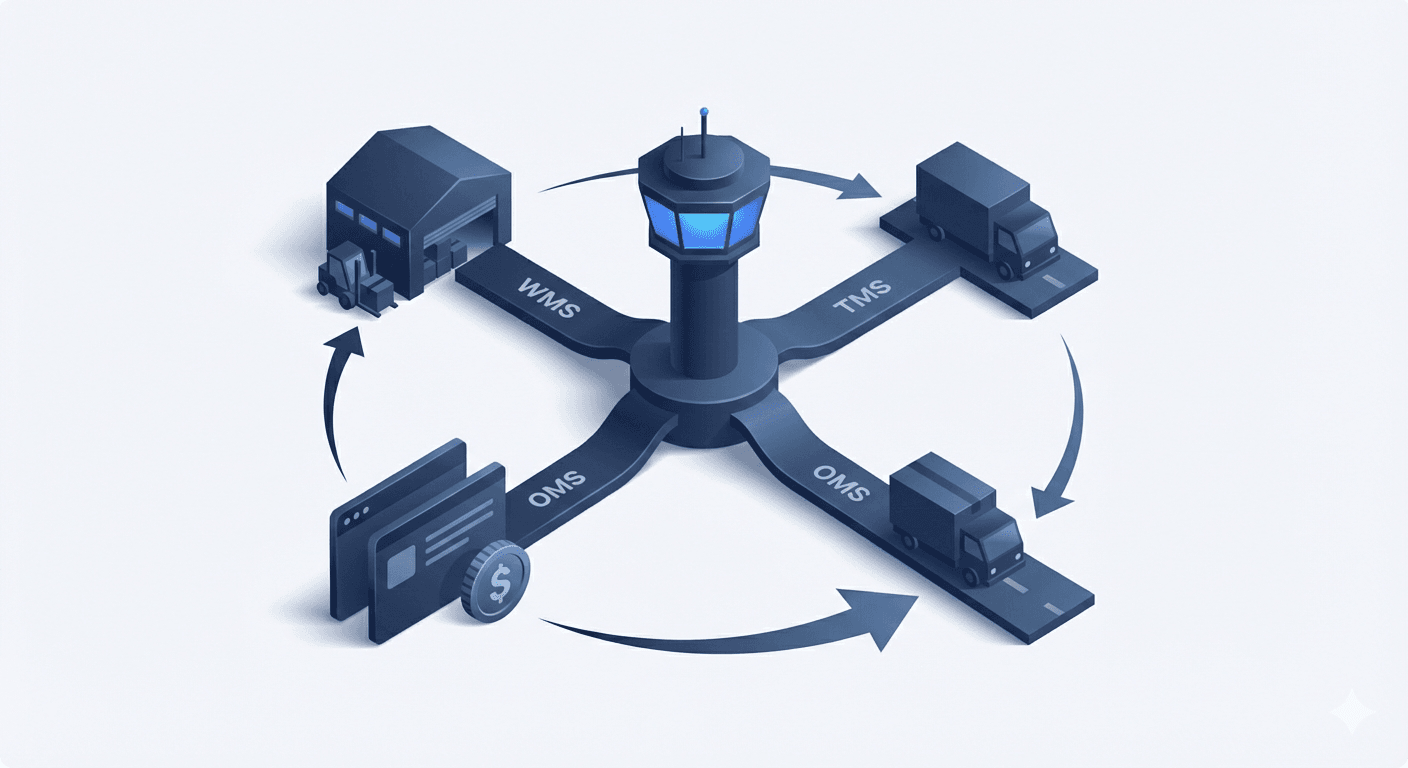
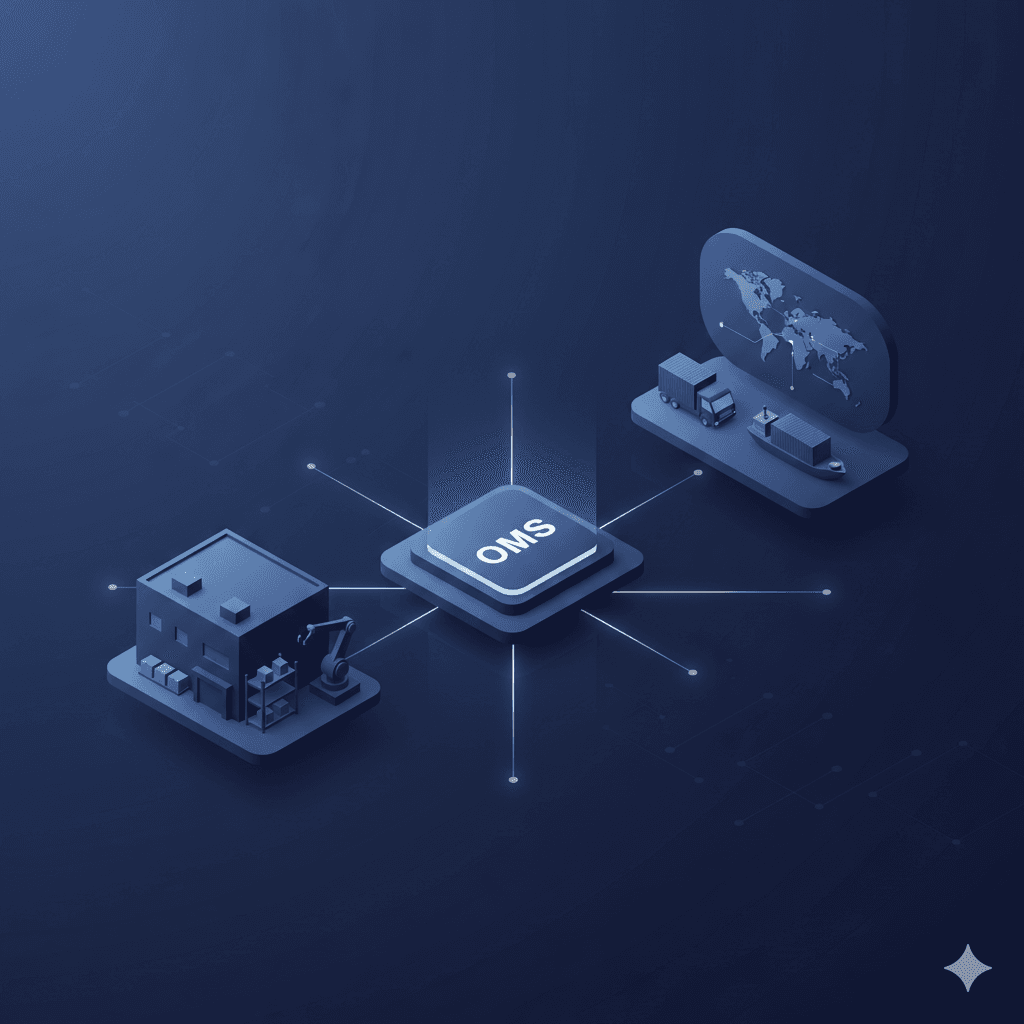
An Order Management System is the system that manages the full order lifecycle across sales channels and fulfillment operations.
It acts as the control layer between customer demand and operational execution.
Core role of an OMS
In an omnichannel environment, the system helps businesses:
- Capture orders from multiple channels
- Validate order details and payment states
- Check available inventory across locations
- Route orders to the best fulfillment point
- Split or combine fulfillment where needed
- Sync statuses across systems
- Support cancellations, returns, and exchanges
- Maintain a single view of each order
This is why enterprise order management is no longer just about processing orders. It is about coordinating demand, inventory, and fulfillment decisions in real time.
In simple terms
An Order Management System answers the questions that matter most:
- Where should this order be fulfilled from?
- Is the inventory actually available?
- Can the order be delivered on time?
- What happens if one location is out of stock?
- How should the customer be updated?
- How do all teams see the same order status?
Why omnichannel complexity is increasing in MENA
Retail and commerce businesses in MENA are expanding quickly across digital and physical touchpoints. Growth is coming from more channels, more fulfillment models, and higher customer expectations.
That creates new pressure on operations teams.
Common complexity drivers in the region
- Expansion across multiple countries
- More marketplaces and digital storefronts
- Higher demand for fast fulfillment
- Store-based fulfillment models
- Cross-border and regional inventory movement
- Different service expectations by city or market
- More returns and customer service touchpoints
- Need for centralized visibility across business units
For example, one brand may sell online in Saudi Arabia, operate stores in the UAE, fulfill from a warehouse in one market, and rely on marketplace channels in another. Without a unified Order Management System, those channels often operate in silos.
That leads to problems such as:
- Overselling
- Delayed fulfillment
- Inconsistent stock visibility
- Manual order handling
- Poor customer updates
- Higher support workload
How an Order Management System improves omnichannel customer experience
Customers notice operational gaps very quickly.
They may not know why an order was delayed, why an item showed in stock but could not be fulfilled, or why support gave a different answer than the website. But they do feel the friction.
An Order Management System improves omnichannel customer experience by making operations more coordinated behind the scenes.
1. Better order visibility
Customers and internal teams need clear order status information.
A good OMS helps businesses maintain one order view across channels so that:
- Customer support sees the latest status
- Operations sees fulfillment progress
- Customers receive more accurate updates
- Business teams avoid conflicting information
2. More accurate inventory availability
Inventory visibility is one of the biggest drivers of customer trust.
When stock data is fragmented, businesses risk:
- Selling unavailable items
- Showing the wrong fulfillment promise
- Creating order cancellations after payment
- Missing opportunities to fulfill from another node
An OMS improves this by using unified inventory visibility across stores, warehouses, dark stores, and other fulfillment locations.
3. Faster and smarter fulfillment decisions
The customer experience improves when the system routes orders based on logic, not manual intervention.
This can include routing based on:
- Inventory availability
- Proximity to the customer
- Delivery promise
- Store or warehouse capacity
- Shipping cost
- Fulfillment priority rules
That is where order orchestration becomes critical.
4. More reliable omnichannel fulfillment options
Customers increasingly expect flexibility, such as:
- Ship from warehouse
- Ship from store
- Click and collect
- Marketplace fulfillment coordination
- Split shipment support
- Returns to store or warehouse
An Order Management System helps support these models without creating chaos for operations.
5. Smoother post-purchase experience
The customer journey does not end at checkout.
An OMS also improves:
- Order status communication
- Partial shipment handling
- Cancellation workflows
- Return and exchange coordination
- Exception resolution
That leads to a more consistent customer experience across all channels.
Key capabilities to look for in order management software
Not every OMS is designed for omnichannel complexity. Businesses should look beyond basic order capture.
A strong order management system for retail should support both visibility and execution.
Essential capabilities
Multi-channel order capture
The system should collect and manage orders from ecommerce stores, marketplaces, retail locations, and partner channels in one place.
Centralized order view
Teams should be able to track the full order lifecycle without jumping between disconnected tools.
Inventory visibility across locations
This is essential for accurate promising and fulfillment planning.
Order orchestration rules
The system should be able to route orders intelligently based on business rules and operational constraints.
Split order and multi-location fulfillment support
This is important when different items in the same order must be fulfilled from different locations.
Status synchronization
Channel, fulfillment, and customer-facing systems should remain aligned.
Returns and exception workflows
The system should support real-world operations, not just ideal scenarios.
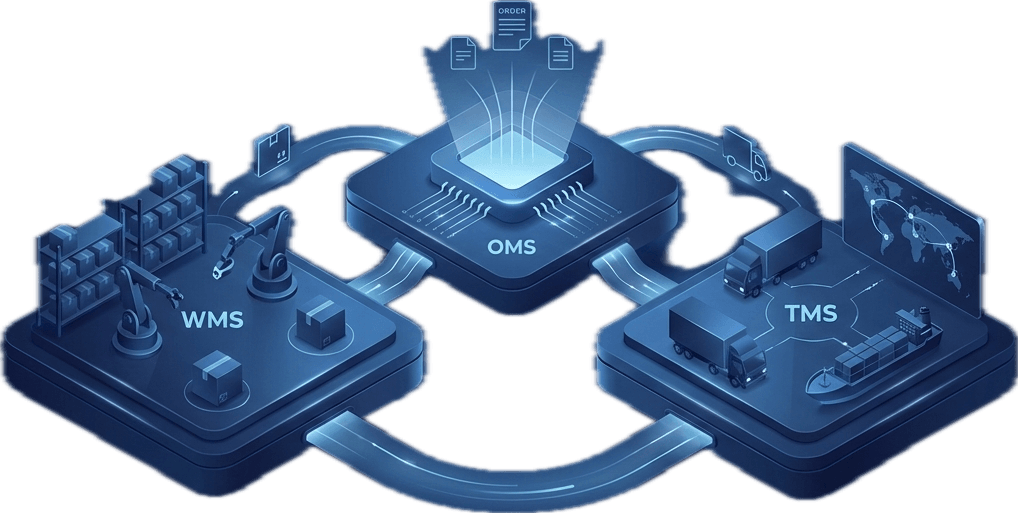
Integration with WMS, TMS, ERP, POS, and marketplaces
An OMS becomes more powerful when it connects the broader commerce and supply chain stack.
Useful advanced capabilities
- Promise date logic
- Delivery slot awareness
- Store fulfillment prioritization
- Inventory reservation rules
- Order hold and review workflows
- Distributed order management
- Customer communication triggers
- Performance analytics by channel and fulfillment source
How order orchestration supports retail fulfillment
Order orchestration is one of the most valuable capabilities inside an Order Management System.
It is the logic that decides how an order should move from order capture to fulfillment execution.
What order orchestration helps manage
- Which location should fulfill the order
- Whether the order should be split
- Which inventory pool should be used
- Whether a store, warehouse, or dark store should be prioritized
- How to balance speed, cost, and capacity
- What should happen if the preferred node cannot fulfill
Why this matters
Without orchestration, businesses often rely on fixed rules or manual decisions.
That can create:
- Slower processing
- Higher shipping cost
- Underused store inventory
- Fulfillment bottlenecks
- Inconsistent customer promises
With good order orchestration, businesses can improve both efficiency and customer satisfaction.
Example
A customer places one order containing three items.
The system can decide to:
- Fulfill one item from the nearest store
- Fulfill two items from the main warehouse
- Trigger separate shipment updates
- Keep one order view for the customer
- Coordinate fulfillment without manual intervention
This is a practical example of omnichannel fulfillment working at scale.
Practical examples of omnichannel order management
The value of an Order Management System becomes clearer when viewed through real business use cases.
Store and ecommerce inventory sharing
A retailer sells through both stores and ecommerce.
Without a central OMS:
- Store inventory may remain invisible online
- Online orders may oversell
- Customers may face avoidable cancellations
With an OMS:
- Inventory is visible across channels
- The system can route orders to stores when needed
- Stock can be used more efficiently
Marketplace and direct-channel coordination
A brand sells through its own website and third-party marketplaces.
Without coordinated order management:
- Marketplace orders may be handled separately
- Inventory may not sync correctly
- Status updates may lag
With omnichannel order management:
- Orders from all channels flow into one control layer
- Inventory logic remains consistent
- Channel-specific fulfillment rules can still be applied
Click and collect
A customer wants to buy online and pick up in store.
That requires the system to:
- Validate store inventory
- Reserve stock
- Trigger internal store workflow
- Update order status
- Notify the customer at the right time
An OMS helps coordinate all of those steps cleanly.
Distributed fulfillment across locations
A business has one central warehouse, two urban stores, and one dark store.
A strong OMS can decide the best fulfillment source based on:
- Customer location
- Available stock
- SLA promise
- Node capacity
- Shipping cost
This is where unified commerce starts becoming operationally efficient, not just strategically attractive.
Common mistakes businesses make without a unified system
Many omnichannel problems are not caused by demand. They are caused by disconnected systems.
Typical issues without an OMS
- Different channels operating on different stock views
- Orders managed separately by channel
- Manual intervention for routing decisions
- Poor visibility after order placement
- Delayed support response due to missing status data
- Difficult returns and exchange handling
- Limited ability to scale new channels
Business impact
These issues often lead to:
- Higher cancellation rates
- Slower fulfillment
- Increased operational cost
- More customer complaints
- Lower trust in stock accuracy
- Reduced margin on fulfillment decisions
A unified Order Management System helps reduce these issues by replacing fragmented workflows with coordinated execution.
How to evaluate an Order Management System for MENA
Businesses in MENA should assess an OMS based on both technical fit and operational reality.
The right system should support growth across markets, channels, and fulfillment models.
Evaluation criteria
Regional flexibility
Can the system support operations across Saudi Arabia, the UAE, Qatar, and other markets with different workflows and business entities?
Multi-channel readiness
Can it support ecommerce, stores, marketplaces, and partner-led sales models from one platform?
Strong inventory visibility
Can it provide real-time or near-real-time visibility across all relevant nodes?
Orchestration capability
Can it route orders based on business logic, not just static assignment?
Integration depth
Can it connect with existing WMS, TMS, ERP, POS, and customer-facing systems?
Scalability
Can it support higher order volume, more channels, and more locations without creating operational friction?
Usability for operations teams
Can the people managing orders, exceptions, and customer issues use it effectively every day?
Questions to ask before choosing a system
- Can it support omnichannel fulfillment models we plan to add?
- How does it handle stock reservation and availability logic?
- Can it support split orders and multi-location fulfillment?
- What visibility does it provide across the order lifecycle?
- How easily can it integrate with our existing software stack?
- Does it support regional growth without major rework?
FAQ
What is an Order Management System?
An Order Management System is software that helps businesses capture, manage, track, and fulfill orders across multiple sales channels and fulfillment locations.
Why is an Order Management System important for omnichannel retail?
It helps businesses coordinate orders, inventory, and fulfillment across stores, websites, marketplaces, and other channels. This improves visibility, reduces errors, and supports a smoother customer experience.
What is omnichannel order management?
Omnichannel order management is the process of managing orders across multiple sales and fulfillment channels through a unified system. It helps ensure consistent inventory, accurate order routing, and coordinated customer communication.
How does an OMS improve customer experience?
It improves customer experience by reducing stock errors, enabling faster fulfillment, providing clearer order status visibility, and supporting more flexible fulfillment options such as ship-from-store or click and collect.
What is the difference between order management and order orchestration?
Order management covers the overall lifecycle of the order. Order orchestration is the decision logic within that process that determines how and where the order should be fulfilled.
What should businesses in MENA look for in order management software?
They should look for multi-channel support, strong inventory visibility, flexible order orchestration, integration with operational systems, and the ability to scale across countries, channels, and fulfillment models.
Conclusion
An Order Management System is no longer optional for businesses serious about omnichannel growth in MENA.
As retail and commerce operations become more connected, the challenge is no longer just capturing orders. It is managing them intelligently across channels, inventory pools, and fulfillment nodes while protecting the customer experience at every step.
The businesses that succeed in omnichannel retail are the ones that can unify demand, inventory visibility, and fulfillment decisions. They can promise accurately, fulfill efficiently, and keep customers informed from checkout to delivery and beyond.
If your business is looking to improve omnichannel operations across Saudi Arabia, the UAE, Qatar, and the wider region, the right Order Management System can provide the visibility, orchestration, and control needed to scale with confidence.
Explore how Omniful.ai can help you build a more connected omnichannel operation with an Order Management System designed for modern retail growth in MENA.
Paylaş