Order Management System Vendors: Evaluation Guide

İçindekiler

Paylaş


Order Management System Vendors: Evaluation Guide
Choosing among order management system vendors is rarely just a software decision. It is an operating model decision.
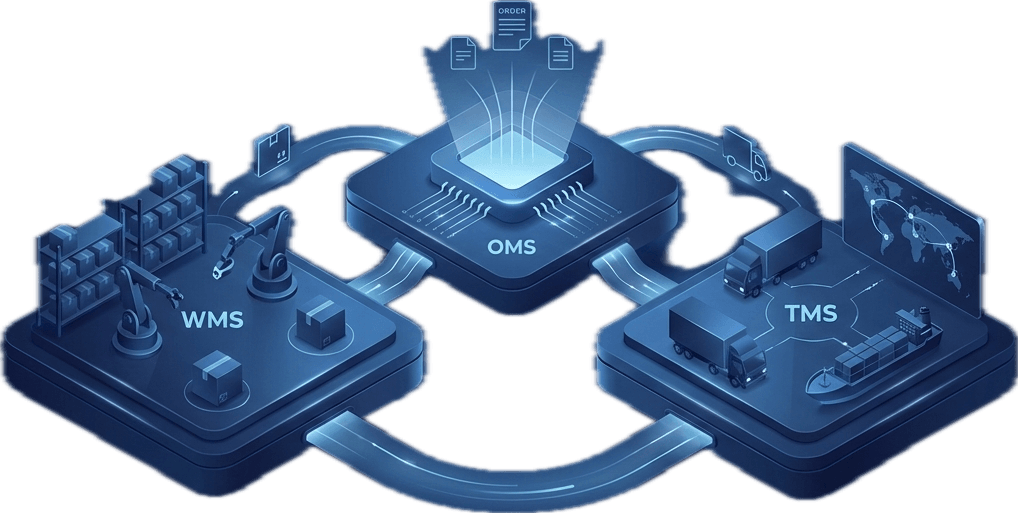
An OMS sits at the center of how orders are captured, routed, fulfilled, tracked, and updated across channels. If the platform is a poor fit, the effects show up everywhere: delayed fulfillment, fragmented inventory visibility, more manual work, inconsistent customer experience, and weaker decision-making. If the fit is right, the OMS can improve coordination across commerce, warehouse, logistics, support, and finance teams.
That is why order management system evaluation deserves more rigor than a basic feature checklist. The right vendor is not simply the one with the longest list of capabilities. It is the one that fits your channels, workflows, integration environment, service model, and growth plans.
This guide explains how to evaluate OMS vendors in a structured way. It covers what to assess, where vendors differ, which mistakes to avoid, and how to make a selection that supports operational efficiency and long-term ROI.
Why evaluating OMS vendors has become more complex
A few years ago, many businesses could evaluate order management software with a relatively narrow lens. The main questions were often about order capture, basic status updates, and simple fulfillment workflows.
That is no longer enough.
In 2026, businesses are often dealing with a more demanding mix of requirements:
- Multiple sales channels and marketplaces
- D2C and B2B order flows running together
- Complex fulfillment promises across warehouses or stores
- Regional delivery partners and shipping rules
- Inventory synchronization across systems
- Returns, cancellations, and exception handling at scale
- Tighter expectations around visibility, speed, and accuracy
As a result, order management system vendors now differ on much more than interface or price. They differ in architecture, workflow depth, integration maturity, automation flexibility, reporting quality, implementation approach, and ability to support real operational complexity.
That is why buyers need a broader evaluation framework.
What order management system vendors actually provide
At a high level, OMS vendors provide software that helps businesses manage the lifecycle of an order across channels and fulfillment operations.
But not every OMS does this in the same way or at the same depth.
Core OMS capabilities
Most ecommerce OMS platforms cover the following areas to some degree:
- Order ingestion from one or more sales channels
- Order status management
- Inventory synchronization or visibility
- Fulfillment orchestration
- Routing logic
- Exception handling
- Returns or reverse workflow support
- Reporting and operational dashboards
- Integration with connected systems
These sound similar on paper, which is why many vendor shortlists appear interchangeable early in the process.
What separates one OMS vendor from another
The real differences tend to show up in how well vendors handle complexity.
For example:
- Can the platform support a true multi-channel order management system model, or is it better suited to a narrow ecommerce use case?
- How configurable is routing logic?
- Can it support marketplace, D2C, wholesale, and store-based workflows together?
- How strong are the integrations with ERP, WMS, POS, shipping, and marketplace systems?
- Does it give the team real operational control, or just basic visibility?
- How well does it scale as volume, channels, and workflows grow?
This is where a serious OMS vendor comparison begins.
How to evaluate order management system vendors
A useful evaluation process should move from business fit to technical fit to commercial fit. Starting with features alone usually leads to the wrong decision.
1. Business fit and operating model alignment
Start by assessing whether the OMS matches how your business actually works.
A retail brand selling D2C, marketplace, and B2B orders has different needs from a logistics-led operation managing distributed fulfillment for multiple sellers. A company with one warehouse and one channel should not evaluate vendors the same way as a business running multiple fulfillment nodes across regions.
Key questions:
- Does the vendor support your sales model today?
- Can it handle your expected channel mix over the next two to three years?
- Does it fit your operational structure, or will your team need to bend around the software?
- Is it stronger for retail, logistics, omnichannel commerce, or a specific niche?
This is one of the most overlooked parts of OMS selection criteria . A vendor can be technically strong and still be the wrong choice if the operating model fit is poor.
2. Multi-channel order management capabilities
This is often the first real stress test.
If your business sells across marketplaces, ecommerce storefronts, social channels, retail locations, or B2B channels, the OMS needs to unify those flows in a workable way.
Evaluate whether the platform can:
- Consolidate orders from all relevant channels
- Normalize data consistently across channels
- Manage channel-specific rules without creating operational chaos
- Handle split orders, partial fulfillment, cancellations, and returns cleanly
- Support routing decisions based on inventory, geography, SLAs, or cost
A vendor may claim omnichannel support, but the quality of that support matters more than the label.
3. Inventory visibility and orchestration
Inventory visibility is one of the biggest fault lines in order operations. Many operational issues that appear to be fulfillment problems are actually inventory coordination problems.
Strong OMS for retail and logistics should support better decision-making around available, reserved, allocated, and in-transit stock. It should also help the business reduce overselling, improve order promising, and route orders more intelligently.
Look closely at:
- Real-time or near-real-time inventory updates
- Multi-location inventory visibility
- Reservation and allocation logic
- Safety stock support
- Backorder logic
- Inventory sync with sales channels and fulfillment systems
If your business depends on speed and accuracy, this part of the evaluation deserves more scrutiny than the homepage messaging usually suggests.
4. Automation and workflow flexibility
One major reason businesses invest in OMS software is to reduce manual work and improve consistency.
That means automation should be evaluated as a practical capability, not as a vague claim.
Assess whether the platform supports:
- Rules-based order routing
- Fulfillment prioritization
- Exception workflows
- Status-based automation
- Cancellation and return handling logic
- Customizable business rules for specific channels or sellers
- Low-friction workflow edits as your operations evolve
A good OMS helps teams execute faster with fewer manual interventions. A better OMS also helps them adapt workflows without requiring constant vendor dependency.
5. Integrations and ecosystem readiness
Integration quality is often where strong demos meet operational reality.
Most OMS buyers already use several adjacent systems. That may include ERP, WMS, CRM, storefronts, marketplaces, shipping tools, finance systems, customer support platforms, or reporting environments.
This makes OMS integrations and scalability a central part of the evaluation.
Review:
- Native integrations available today
- API quality and documentation
- Webhook support
- Middleware compatibility
- Marketplace and storefront connectors
- ERP and warehouse integration maturity
- Data model flexibility
- Implementation complexity for custom integrations
Do not just ask whether an integration exists. Ask how it behaves in live operations, what edge cases it covers, and who owns maintenance over time.
6. Scalability, performance, and reliability
A platform that works at current volume may still fail the business later.
Scalability should be evaluated in terms of transaction volume, channel growth, user growth, operational complexity, and future workflow demands. Reliability should be evaluated in terms of uptime expectations, incident responsiveness, and the vendor’s operational discipline.
Questions worth asking:
- What kinds of businesses and order volumes does the vendor typically support?
- How does the system perform during peak events or seasonal surges?
- What controls exist for monitoring and alerting?
- How are releases managed?
- What service commitments or SLAs are offered?
This matters because order fulfillment software becomes deeply embedded in daily execution. Downtime or poor performance is not a minor inconvenience. It can directly affect revenue, customer experience, and team productivity.
7. Reporting, analytics, and decision support
Many teams underestimate how much value an OMS can provide beyond transaction handling.
The best platforms help teams understand what is happening operationally, not just what happened to individual orders. That can improve planning, exception reduction, staffing, fulfillment design, and customer communication.
Look for support for:
- Operational dashboards
- Order lifecycle visibility
- Exception tracking
- Fulfillment performance analysis
- Channel performance views
- Inventory health indicators
- Export flexibility or BI integration
This is especially important if the business wants to improve execution over time, not just digitize existing workflows.
8. User experience and operational usability
Even technically strong platforms fail when operational teams avoid using them properly.
Usability matters because OMS software is not just for executives or analysts. It is used by operations teams, support teams, managers, and sometimes store or warehouse personnel. If workflows are hard to navigate, key actions take too many steps, or exception handling is confusing, adoption suffers.
Evaluate:
- Interface clarity
- Search and filtering quality
- Bulk action support
- Permission handling
- Ease of onboarding users
- Workflow visibility for non-technical teams
A powerful platform that only a few experts can operate confidently may create hidden dependency risk.
9. Security, compliance, and governance
For many businesses, especially those dealing with enterprise customers, sensitive customer data, or complex partner ecosystems, governance matters as much as features.
Depending on the business, evaluate:
- Access controls and role-based permissions
- Audit logs
- Data handling practices
- Hosting options
- Regional compliance requirements
- Security certifications or controls
- Backup and disaster recovery approach
Security and compliance may not drive the shortlist initially, but they often become decisive late in the process. It is better to evaluate them early.
10. Vendor maturity, support, and partnership quality
Software capabilities matter, but so does the vendor behind them.
A strong vendor relationship can improve implementation quality, speed up issue resolution, and make future evolution easier. A weak vendor relationship can turn every workflow change into a slow, frustrating negotiation.
Assess the vendor on:
- Implementation approach
- Support responsiveness
- Product roadmap clarity
- Documentation quality
- Customer success model
- Industry understanding
- Willingness to solve real business problems, not just demo ideal paths
This is often where the difference between a software supplier and a true partner becomes visible.
OMS vendor comparison: the criteria that matter most
If you need a simple structure for OMS software comparison , use four weighted buckets:
Strategic fit
Does the vendor align with your business model, industry, channel mix, and future operating direction?
Operational depth
Can the platform handle the real complexity of your order flows, inventory logic, routing needs, and exception management?
Technical readiness
Are the integrations, APIs, performance, reliability, and governance controls strong enough for your environment?
Commercial viability
Is the pricing model reasonable relative to expected business value, implementation effort, support model, and long-term ownership cost?
This framework helps prevent a common buying mistake: overweighting visible front-end features while underweighting integration, workflow fit, and long-term scalability.
Common mistakes in order management system evaluation
Even experienced buyers can make avoidable errors when selecting among order management system vendors .
Focusing too heavily on feature count
A bigger feature list does not automatically mean a better fit. The question is whether the features solve your workflows well.
Treating integrations as a checkbox
A listed integration is not the same as a proven integration. Buyers should validate data flow, maintenance ownership, implementation effort, and real-world limitations.
Underestimating implementation complexity
Some OMS platforms look straightforward in demos but require significant workflow mapping, data cleanup, and cross-team coordination during rollout.
Ignoring change management
The success of an OMS depends partly on whether teams can adopt new workflows. Selection decisions should consider operational readiness, training needs, and internal ownership.
Buying only for current scale
An OMS should fit current needs, but it should also support where the business is heading. Choosing a platform that solves only today’s friction may create another migration sooner than expected.
Over-prioritizing price
Software price matters. But price without context can distort the decision. A lower-cost platform that causes manual work, poor visibility, or limited scalability may be more expensive in practice.
A practical OMS vendor selection checklist
A strong order management system evaluation process usually includes the following steps:
- Define business goals before reviewing vendors
- Map your current order and fulfillment workflows
- Identify non-negotiable requirements versus future-state requirements
- Build a vendor scorecard using consistent evaluation categories
- Run scenario-based demos, not generic product tours
- Validate integrations and exception handling in detail
- Assess implementation approach, support model, and roadmap fit
- Compare total cost of ownership, not just license fees
- Involve both business and technical stakeholders in scoring
- Shortlist based on fit, not just market reputation
Questions to ask in demos and evaluations
To improve shortlist quality, ask vendors to show how the platform handles specific scenarios such as:
- Orders from multiple channels hitting different inventory pools
- Split fulfillment across locations
- Marketplace cancellations after allocation
- Delayed inventory sync situations
- Partial shipment or return workflows
- Bulk exception handling
- Channel-specific routing logic
- Reporting on fulfillment delays or allocation issues
Scenario-driven evaluation is usually more revealing than polished walkthroughs.
How to think about ROI and time-to-value
The ROI of an OMS is rarely limited to labor reduction alone.
It may also show up in:
- Better order accuracy
- Fewer cancellations due to inventory issues
- Faster processing times
- Lower operational overhead
- Improved SLA consistency
- Better support team efficiency
- Reduced manual coordination across systems
- Better planning through stronger visibility
For leadership teams, this matters because the business case for an OMS is often both defensive and growth-oriented. It can reduce operational drag while also making future scale more manageable.
Time-to-value depends on several factors:
- How complex your current operations are
- How clean your data and process definitions are
- How many integrations are required
- How mature the vendor’s implementation process is
- Whether internal owners are aligned across teams
The right vendor should be able to explain not just what the platform can do, but how value is typically realized over the first few phases of adoption.
Final thoughts on choosing among order management system vendors
Selecting among order management system vendors is not about finding the most impressive demo or the broadest feature grid. It is about finding a platform that supports the way your business operates now and the way it needs to operate next.
The strongest OMS decisions are grounded in business fit, workflow depth, integration readiness, scalability, and vendor quality. That is what separates a practical long-term investment from an expensive short-term patch.
If your team is evaluating vendors now, resist the urge to rush from shortlist to pricing discussion. A better path is to define what operational success looks like, test vendors against real scenarios, and judge them on their ability to support reliable, scalable execution.
The right choice among order management system vendors should leave your business with more control, better visibility, stronger coordination, and a clearer path to operational efficiency. That is the standard worth buying against.
If you are building your shortlist, start with a scorecard, use scenario-based demos, and evaluate each vendor as both a platform and a long-term operational partner.
FAQ SECTION
How do you evaluate order management system vendors?
Evaluate OMS vendors based on business fit, core features, multi-channel support, integrations, scalability, usability, security, vendor support, and total cost of ownership. A structured scorecard usually produces better decisions than feature-by-feature comparison alone.
What should you look for in an OMS vendor?
Look for real-time inventory visibility, automation flexibility, strong integration options, reporting depth, operational reliability, and support for your specific sales and fulfillment model. The best-fit vendor is not always the one with the most features.
How do OMS vendors differ from each other?
OMS vendors differ in workflow depth, integration maturity, scalability, vertical focus, usability, customization options, implementation approach, and commercial model. Some are better suited for simple ecommerce operations, while others are stronger for complex retail and logistics environments.
Why is choosing the right OMS vendor important?
The right OMS vendor helps improve order accuracy, fulfillment speed, visibility, and operational coordination. The wrong choice can create friction across systems and teams, limiting scalability and delaying ROI.
What are common mistakes when selecting an OMS?
Common mistakes include focusing only on price, assuming listed integrations will work perfectly, underestimating implementation effort, ignoring long-term scalability, and evaluating generic demos instead of real operating scenarios.
How do you choose the right OMS platform?
Start with your business model, workflow complexity, integration needs, and future growth plans. Then compare vendors using consistent criteria, scenario-based demos, and a practical view of time-to-value and long-term ownership.
Paylaş