



Warehouse layout design directly impacts picking speed, storage capacity, and operational efficiency. Learn 10 strategies to maximize warehouse space and improve order picking performance.
Devamını Oku3 Dakikalık Okuma

Warehouse layout design improves picking speed, inventory accuracy, and storage utilization. Learn strategies for aisle design, slotting, bin locations, and WMS optimization.
Devamını Oku11 Dakikalık Okuma
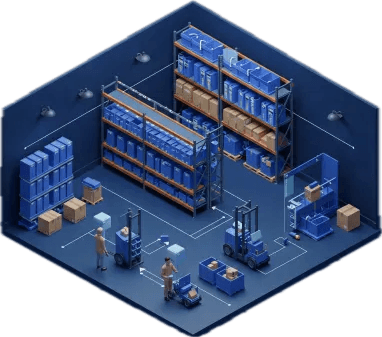
As warehouse operations grow more complex in 2026, businesses must design smarter warehouse layouts to maintain high operational efficiency. Warehouse layout optimization focuses on organizing aisles, storage zones, and bin locations in a way that minimizes picker travel time and improves order fulfillment speed. This guide explains how logistics teams can design warehouse aisles and bin systems to maximize picking speed, improve inventory organization, and increase throughput. It also highlights how Warehouse Management Systems (WMS) help automate slotting strategies and optimize picking paths for modern fulfillment centers.
Devamını Oku5 Dakikalık Okuma
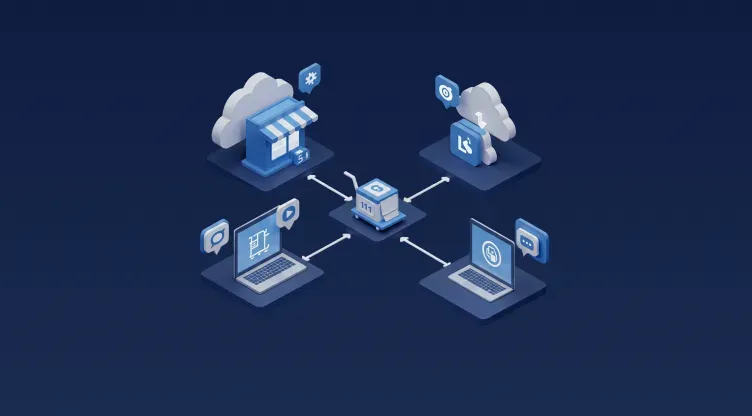
As digital operations expand in 2026, small and medium-sized businesses (SMBs) need technology that works together without long implementation cycles. Plug-and-play integrations allow companies to connect essential tools—such as e-commerce platforms, payment systems, logistics software, and inventory tools—quickly and without heavy development work. This article explains how plug-and-play integrations help SMBs simplify their IT stack, reduce operational complexity, and accelerate system deployment. It also highlights how businesses can scale faster by using pre-built integrations that connect core systems seamlessly.
Devamını Oku6 Dakikalık Okuma

Carrier performance is one of the most important factors influencing logistics efficiency and customer satisfaction. In 2026, modern Transportation Management Systems (TMS) enable logistics teams to track advanced carrier KPIs such as on-time delivery performance, shipment damage rates, and freight invoice accuracy in real time. This guide explains how businesses across the MENA region can use transportation analytics and performance metrics to evaluate carriers, optimize delivery operations, and improve overall supply chain reliability.
Devamını Oku6 Dakikalık Okuma

Learn how connecting your TMS and WMS in 2026 helps align inbound freight with warehouse picking schedules—reducing dock congestion, improving labour planning, and accelerating fulfilment speed.
Devamını Oku6 Dakikalık Okuma

Learn how a WMS improves warehouse labour efficiency in 2026 by optimising shift planning, smarter task allocation, and real-time productivity tracking for MENA operations.
Devamını Oku5 Dakikalık Okuma

This blog explains how ecommerce return management software should function as a reverse-logistics control tower. It breaks down what an OMS controls versus WMS and TMS, highlights common refund delays, and provides a practical checklist to improve refund speed, inventory accuracy, and customer retention.
Devamını Oku7 Dakikalık Okuma

eCommerce growth continues to reshape global trade. In 2026, businesses managing orders across multiple sales channels face constant pressure to keep fulfilment accurate, fast, and on-time. The best Order Management Systems (OMS) help centralise orders, automate workflows, and improve delivery performance—so you can scale without the chaos.
Devamını Oku11 Dakikalık Okuma