Ecommerce Order Management System Features for 2026

İçindekiler

Paylaş


Ecommerce Order Management System Features for 2026
Summary
An ecommerce order management system is the backbone of modern retail operations, enabling businesses to manage orders, inventory, and fulfillment across multiple sales channels. In 2026, with rising customer expectations and complex logistics networks, OMS platforms have evolved into intelligent systems that automate workflows and improve delivery performance.
By integrating with transportation management systems (TMS), an OMS provides real-time visibility into shipments, optimizes order routing, and enhances logistics KPIs such as on-time delivery KPI and carrier performance. This guide explores the essential features every ecommerce OMS must have in 2026 to improve fulfillment speed, increase accuracy, and scale efficiently in a competitive market.
Content
What is an Ecommerce Order Management System
An ecommerce order management system is a centralized platform that manages the entire order lifecycle—from order capture to delivery—across multiple sales channels.
It ensures seamless coordination between:
- Sales channels (marketplaces, websites)
- Inventory systems
- Warehouses
- Shipping carriers
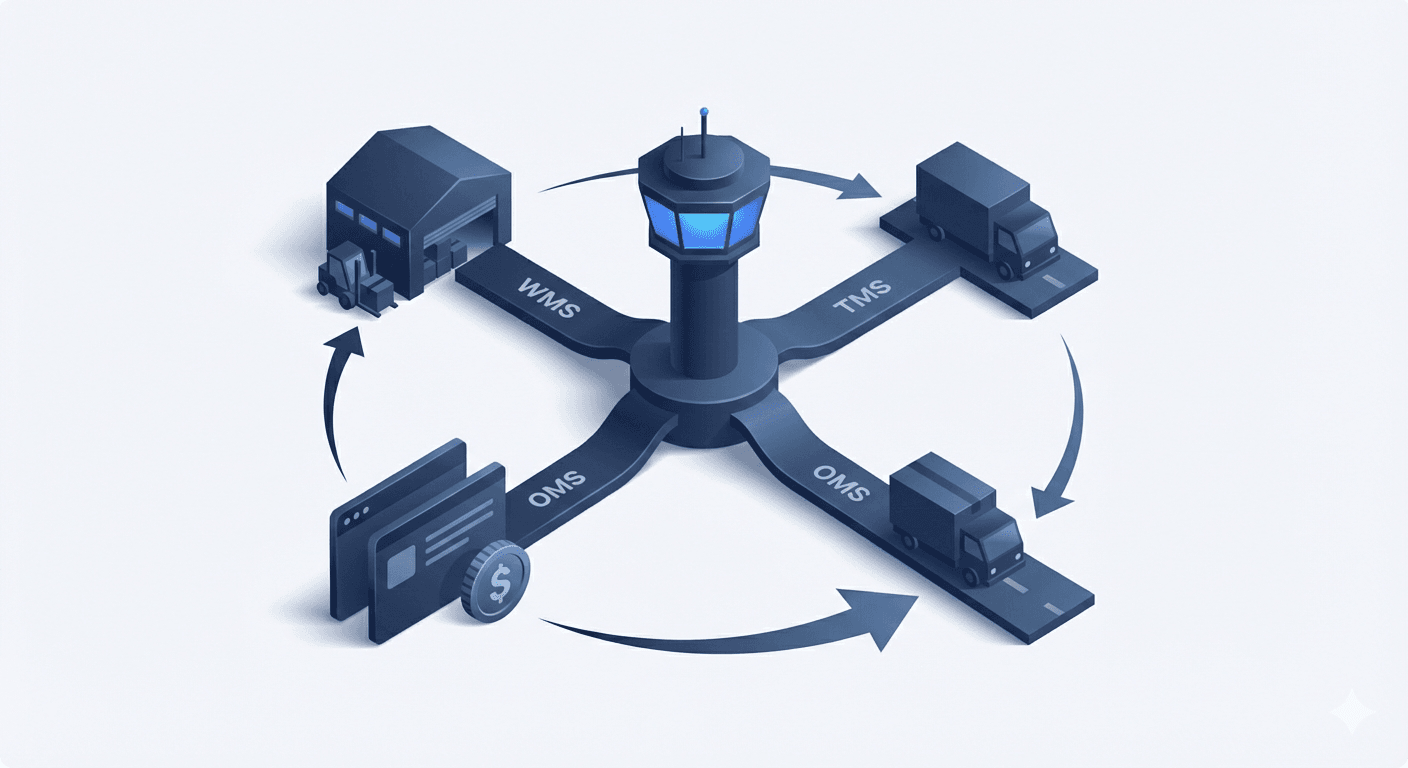
Core Workflow of OMS
Order Capture → Validation → Inventory Allocation → Order Routing → Fulfillment → Shipment → Delivery Tracking
OMS acts as the control layer that orchestrates these processes.
Why Ecommerce Order Management Systems are Important
Modern ecommerce operations are highly complex.
Retailers manage:
- Multiple sales channels
- Distributed inventory
- Multiple warehouses
- Multi-carrier shipping networks
Without an OMS, these processes become fragmented.
Key Benefits of OMS
| Benefit | Impact |
|---|---|
| Centralized Order Management | Unified control across channels |
| Faster Fulfillment | Reduced processing delays |
| Improved Inventory Visibility | Real-time stock updates |
| Better Delivery Performance | Optimized shipping decisions |
| Scalability | Supports business growth |
OMS is essential for improving logistics performance metrics.
Key Features of Ecommerce Order Management System in 2026
1. Real-Time Inventory Visibility
OMS provides a real-time view of inventory across:
- Warehouses
- Stores
- Fulfillment centers
Benefits
- Prevents overselling
- Improves order accuracy
- Enhances customer trust
2. Automated Order Routing
OMS automatically routes orders based on:
- Inventory availability
- Warehouse proximity
- Delivery timelines
This improves on-time delivery KPI performance.
3. Multi-Channel Order Management
Modern OMS platforms support:
- Marketplaces (Amazon, Noon, etc.)
- Ecommerce stores
This enables unified order handling.
4. OMS-TMS Integration
Integration with transportation management systems (TMS) enables:
- Carrier selection
- Shipment tracking
- Delivery optimization
Benefits
| Capability | Impact |
|---|---|
| Carrier Optimization | Improved delivery performance |
| Real-Time Tracking | Better customer experience |
| Analytics | Enhanced decision-making |
5. Order Splitting and Consolidation
OMS supports:
- Splitting orders across warehouses
- Consolidating shipments
This improves fulfillment efficiency.
6. Returns and Reverse Logistics Management
Handling returns efficiently is critical.
OMS enables:
- Return processing
- Refund management
- Reverse logistics tracking
7. Automation Workflows
OMS automates:
- Order validation
- Inventory allocation
- Shipment creation
This reduces manual effort.
8. Analytics and KPI Dashboards
OMS provides insights into:
- Order processing time
- Delivery performance
- Carrier efficiency
These insights improve logistics KPIs 2026.
9. Carrier Performance Analytics
OMS tracks:
- Delivery success rates
- Delay frequency
- Carrier reliability
This supports supply chain carrier evaluation.
10. Freight Cost and Invoice Management
OMS integrates with TMS to monitor:
- Freight invoice accuracy
- Shipping costs
- Billing discrepancies
How OMS Improves Ecommerce Fulfillment
OMS significantly enhances fulfillment operations.
Key Improvements
| Area | Improvement |
|---|---|
| Order Processing | Faster execution |
| Inventory Allocation | Accurate stock usage |
| Shipping | Optimized carrier selection |
| Delivery | Improved on-time performance |
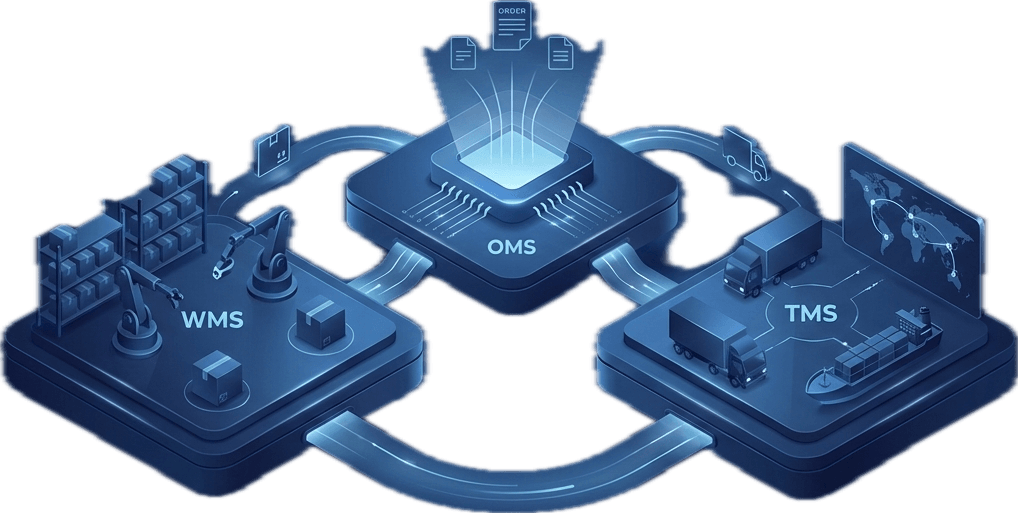
OMS and TMS Integration for Logistics Optimization
Integration between OMS and TMS is crucial for modern logistics.
How It Works
- OMS processes the order
- Shipment details are sent to TMS
- TMS selects the best carrier
- Shipment is tracked in real time
Benefits of Integration
- Real-time shipment visibility
- Improved delivery accuracy
- Enhanced TMS reporting and analytics
Step-by-Step Guide to Implement OMS
Step 1: Define Business Requirements
Identify:
- Order volume
- Sales channels
- Fulfillment model
Step 2: Choose the Right OMS
Look for features such as:
- Automation
- Integration capabilities
- Scalability
Step 3: Integrate with Existing Systems
Connect:
- WMS
- TMS
- Sales channels
Step 4: Configure Workflows
Define rules for:
- Order routing
- Inventory allocation
- Shipment handling
Step 5: Monitor Performance
Track:
- Order processing time
- Delivery KPIs
- Carrier performance
Best Practices for Using OMS
Automate End-to-End Processes
Automation improves speed and accuracy.
Use Data for Decision-Making
Leverage analytics to optimize operations.
Ensure System Integration
Integration ensures seamless workflows.
Focus on Customer Experience
OMS should improve delivery visibility and reliability.
Common Mistakes to Avoid
Choosing Feature-Limited OMS
Limited functionality restricts scalability.
Ignoring Integration
Disconnected systems create inefficiencies.
Lack of Data Utilization
Without analytics, optimization is impossible.
Overcomplicating Workflows
Simple workflows are more effective.
Expert Tips for Retailers
Use Predictive Analytics
Forecast demand and optimize inventory.
Optimize Carrier Selection
Use carrier performance analytics to improve delivery reliability.
Monitor Logistics KPIs
Track performance continuously.
Scale with Automation
Automation enables growth without increasing costs.
Ecommerce OMS in MENA Logistics
In the MENA region, ecommerce growth is accelerating.
Key Challenges
- Cross-border logistics
- Multi-carrier environments
- High customer expectations
OMS platforms integrated with transportation analytics MENA help businesses:
- Improve delivery performance
- Optimize operations
- Scale efficiently
Conclusion
An ecommerce order management system is essential for managing modern retail operations in 2026. With features like real-time inventory visibility, automated order routing, multi-channel support, and OMS-TMS integration, businesses can significantly improve fulfillment speed and delivery accuracy.
By leveraging automation and analytics, retailers can enhance logistics performance metrics, improve on-time delivery KPI, and optimize overall operations. OMS platforms not only streamline workflows but also enable scalability and better customer experience.
In a competitive ecommerce landscape, investing in the right OMS with advanced features is critical for long-term success and operational excellence.
Paylaş