

Table of Contents
Share On


WooCommerce Integration
This native integration with WooCommerce enables order, catalog and inventory synchronization seamless.
Version: v1.0
Date: March 2, 2026
Owner: Sales Channel Product Team
1. Overview
What this integration does
The WooCommerce integration connects your WooCommerce store with Omniful so that:
- Orders created through WooCommerce automatically sync to Omniful for processing.
- Inventory availability maintained in Omniful can be synced to WooCommerce.
- Shipments created in Omniful can update shipment status & tracking to WooCommerce.
- You can configure hub mapping, order status mapping directly from Omniful.
Supported integration types:
- Fulfillment + Shipping – Omniful handles both fulfillment and shipping
- Shipping Only – Omniful handles only shipping, while order creation, catalog remain managed in WooCommerce.
2. Prerequisites
2.1 Sales Channel prerequisites
You will be required to obtain the following details from WooCommerce Store:
- Shop Domain (Your ecommerce store URL)
- Consumer Key
- Consumer Secret
To obtain the above,
- Login to your WooCommerce Admin Panel and visit Advanced
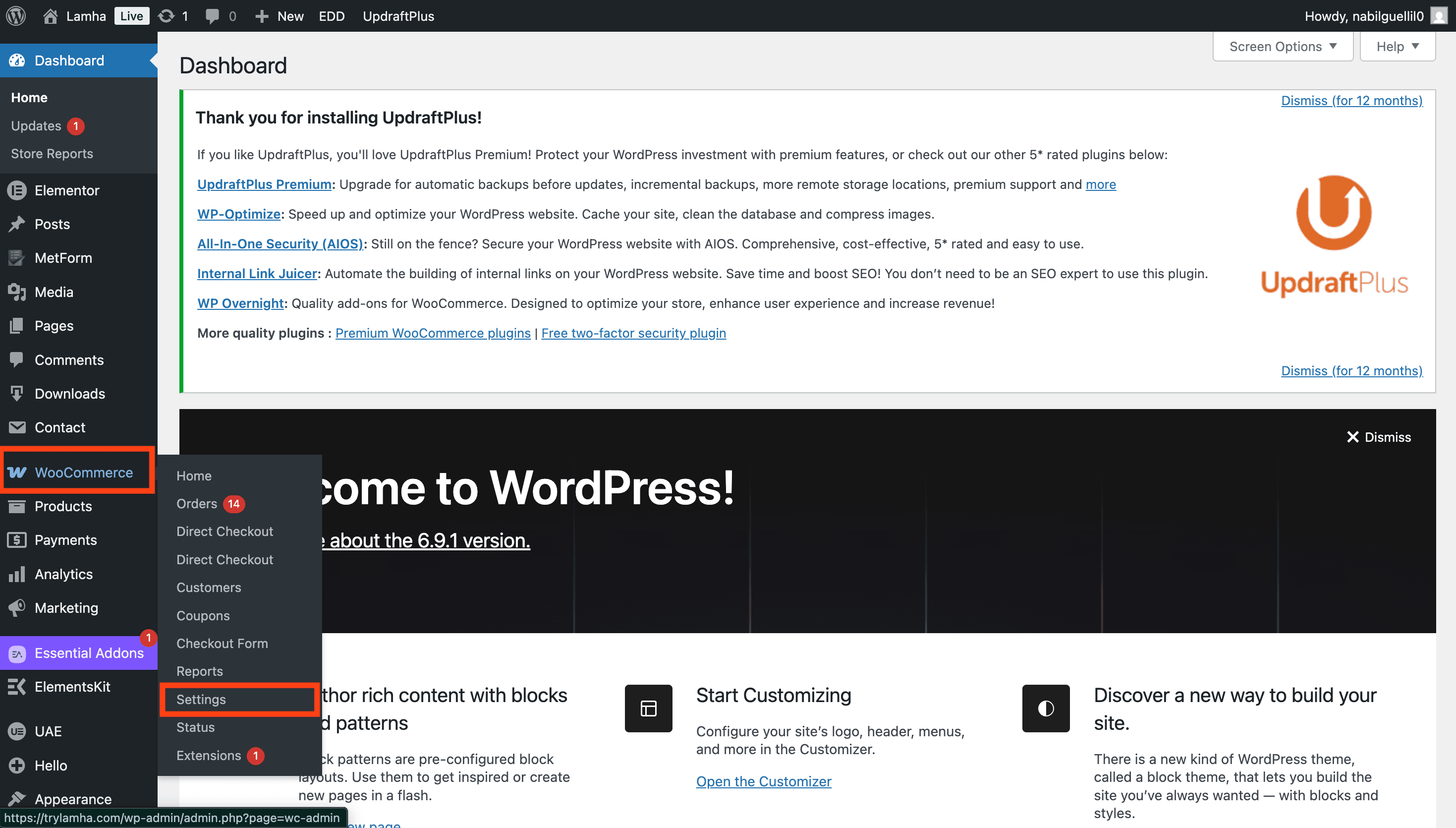
- Visit Integration Tab > Rest API keys
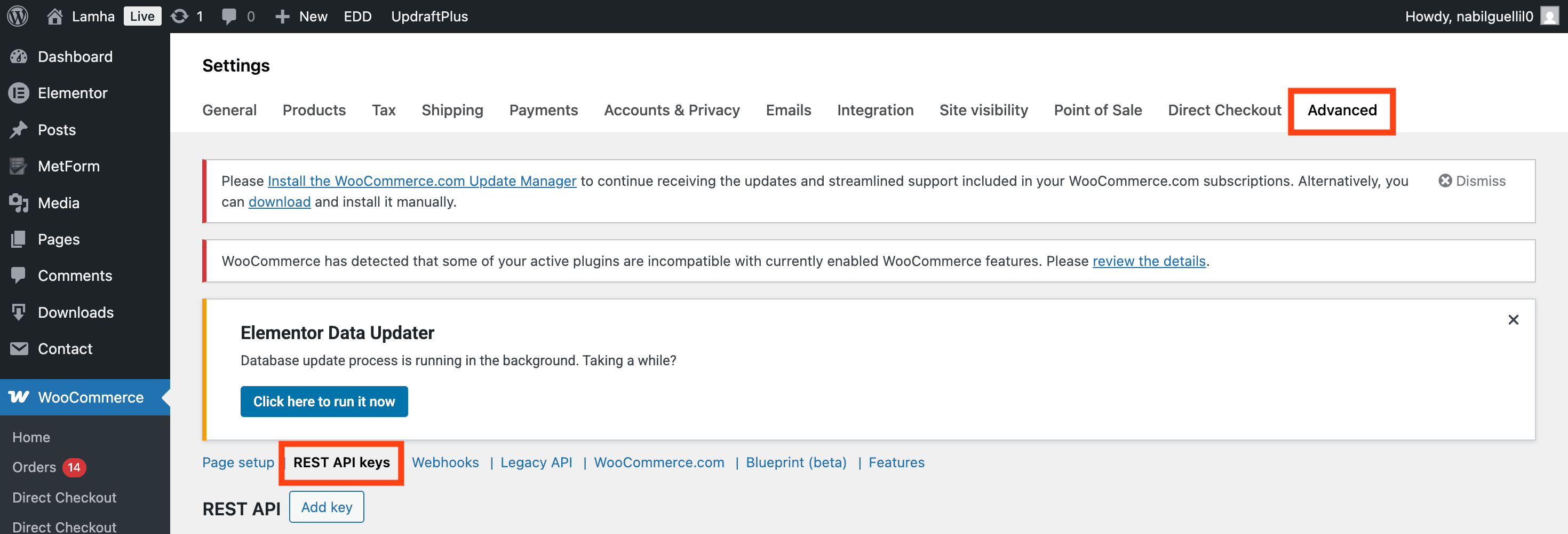
- Click Add Key.
- Provide Read/Write permission, you may add a description for your own reference.
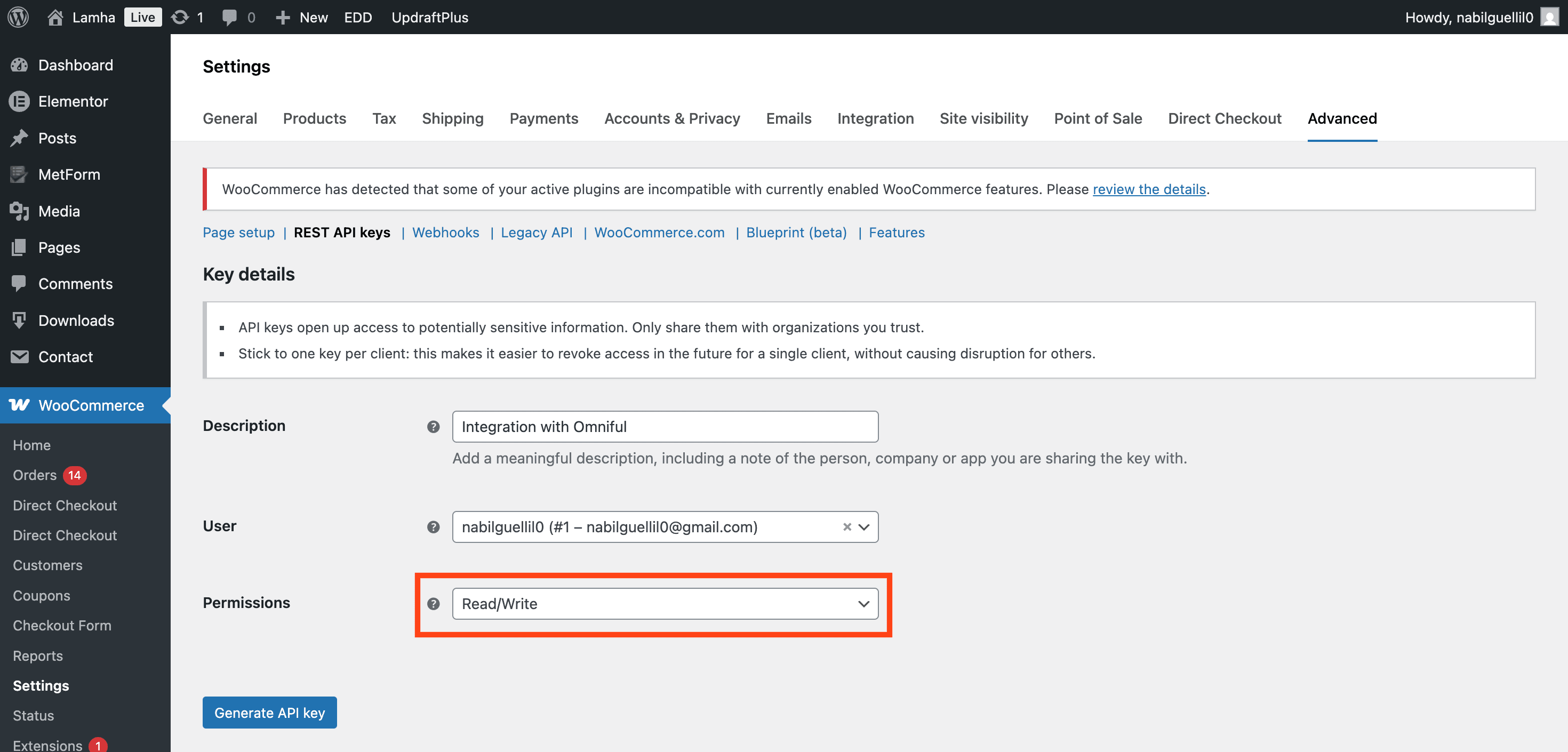
- Click Generate API Key.
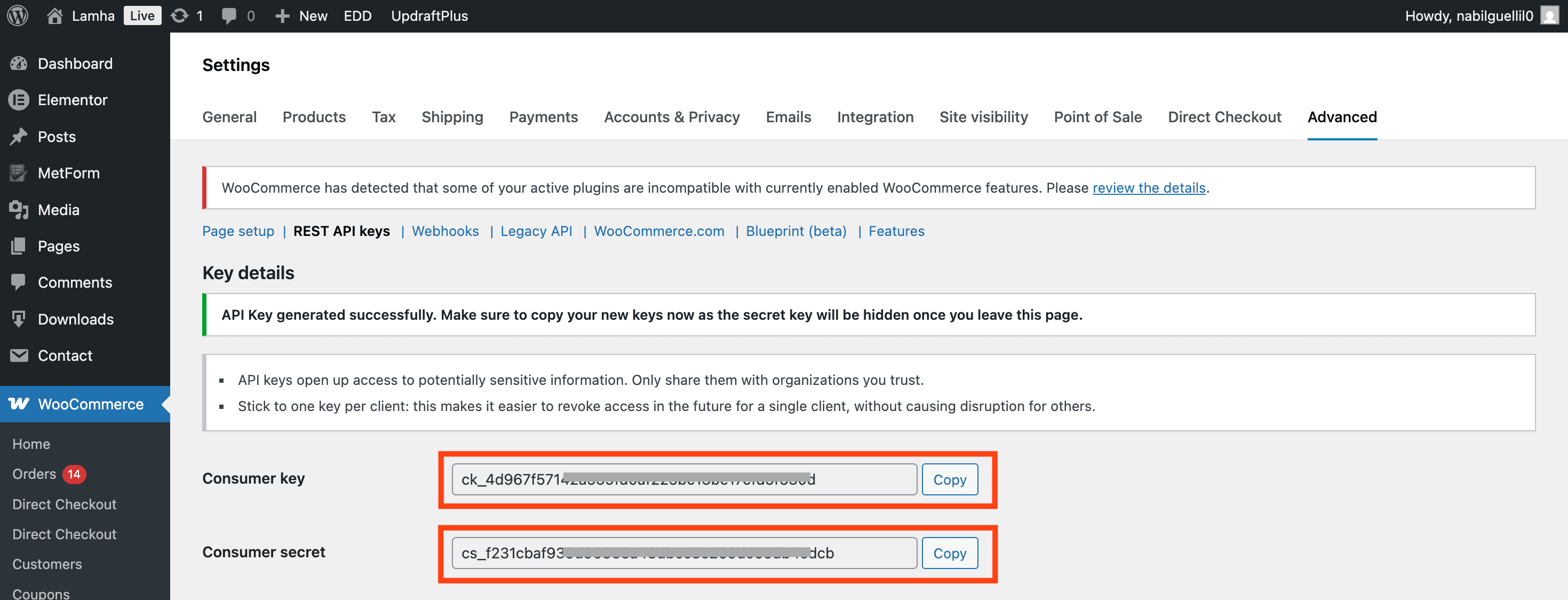
Important : Copy Consumer key and Consumer Secret for further steps.
3. Integration Methods and Setup
3.1 Connect WooCommerce store in Omniful
Once you have the Consumer Key and Consumer secret.
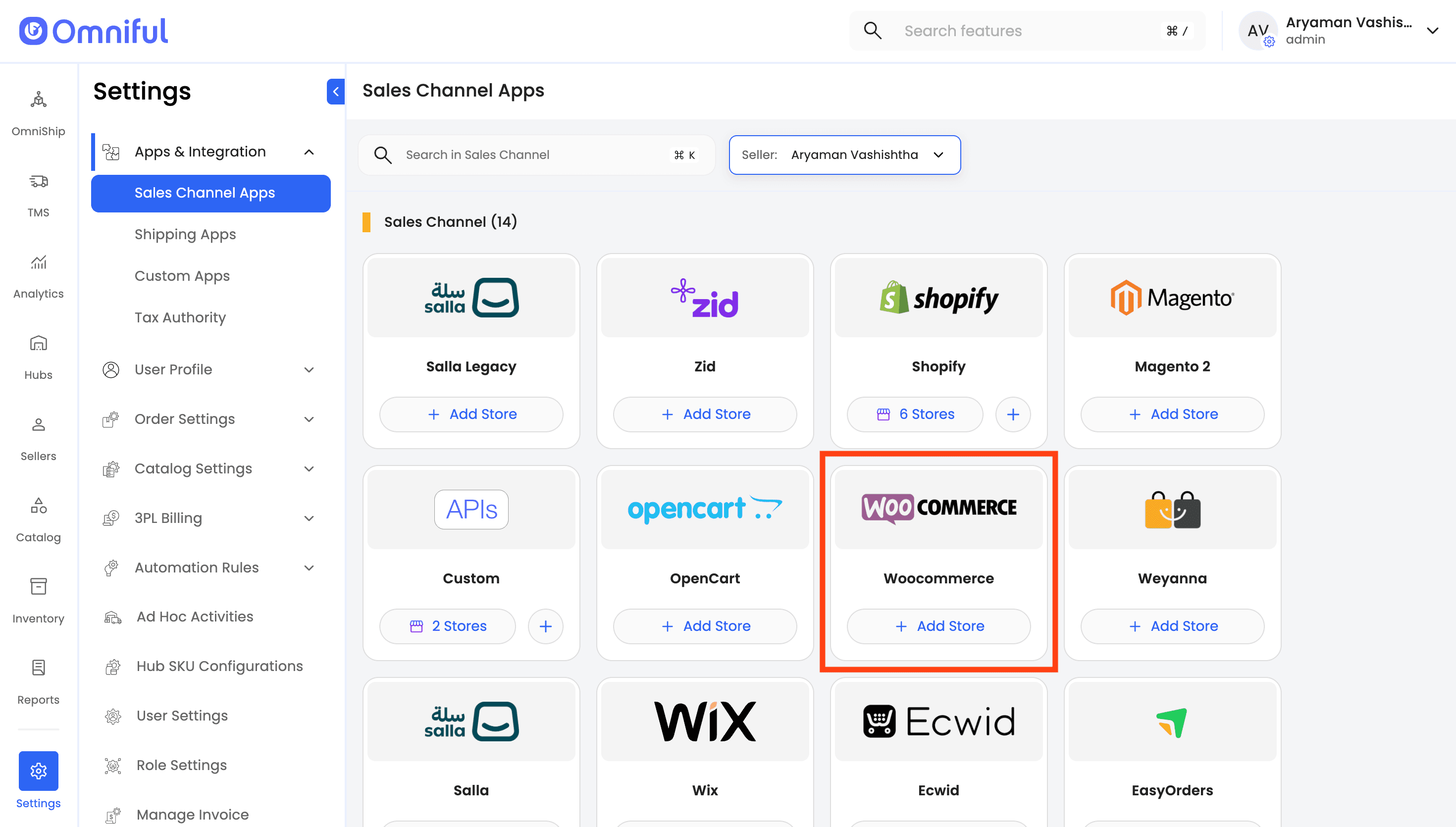
In Omniful, go to: Settings → Apps & Integration→ Sales Channel Apps / Stores.
- Select Seller and choose WooCommerce as the sales channel.
- Click Add Store
- Enter:
- Shop Name (Any name that will represent this store)
- Shop Domain (The shop URL)
- Consumer Key and Consumer Secret Which was copied from WooCommerce.
- Type of Integration : Fulfilment+Shipping or Shipping Only.
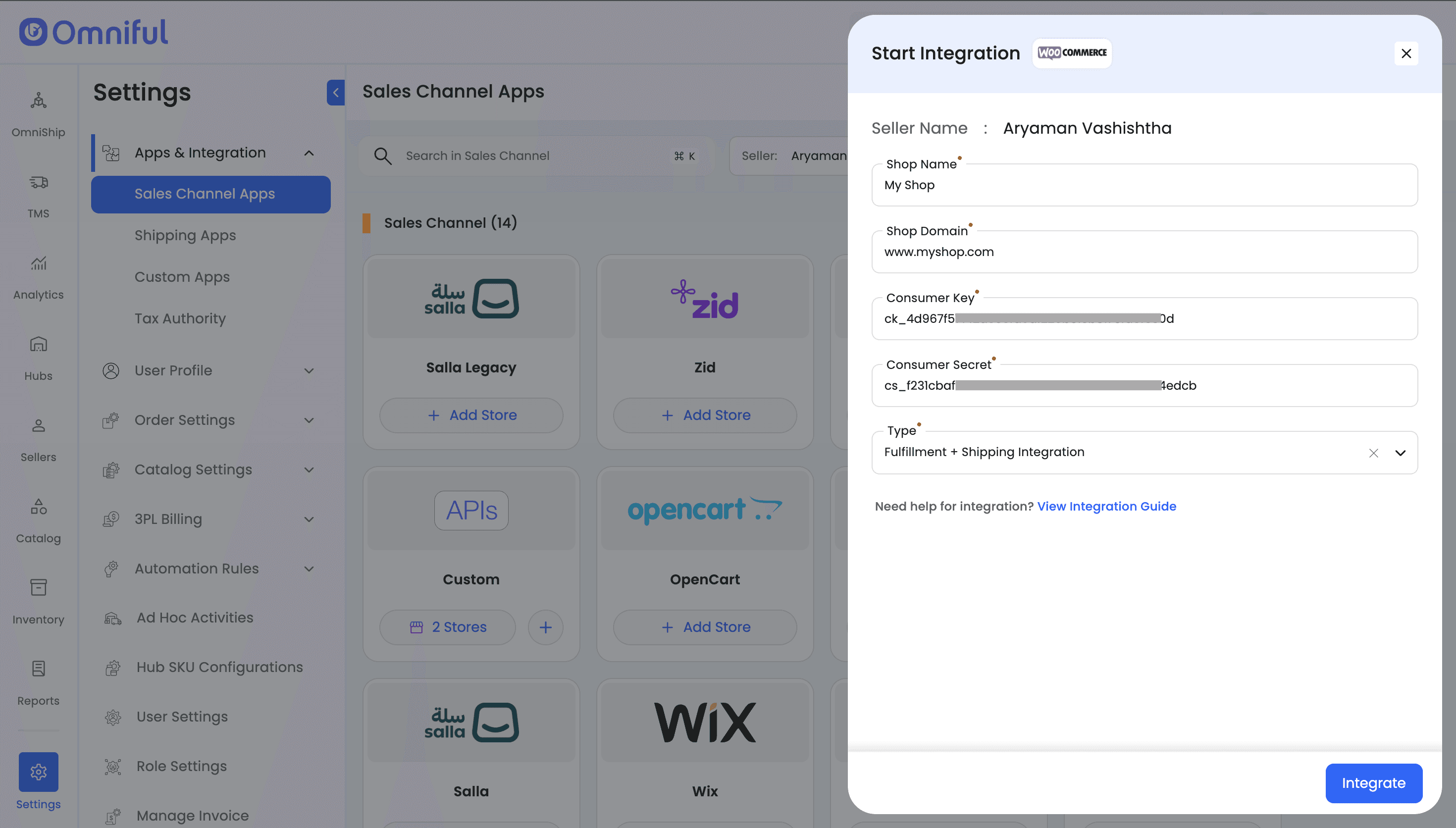
- Click “ Integrate” to complete integration
4. Omniful Configuration
Once the store is connected, configure how data flows between WooCommerce and Omniful.
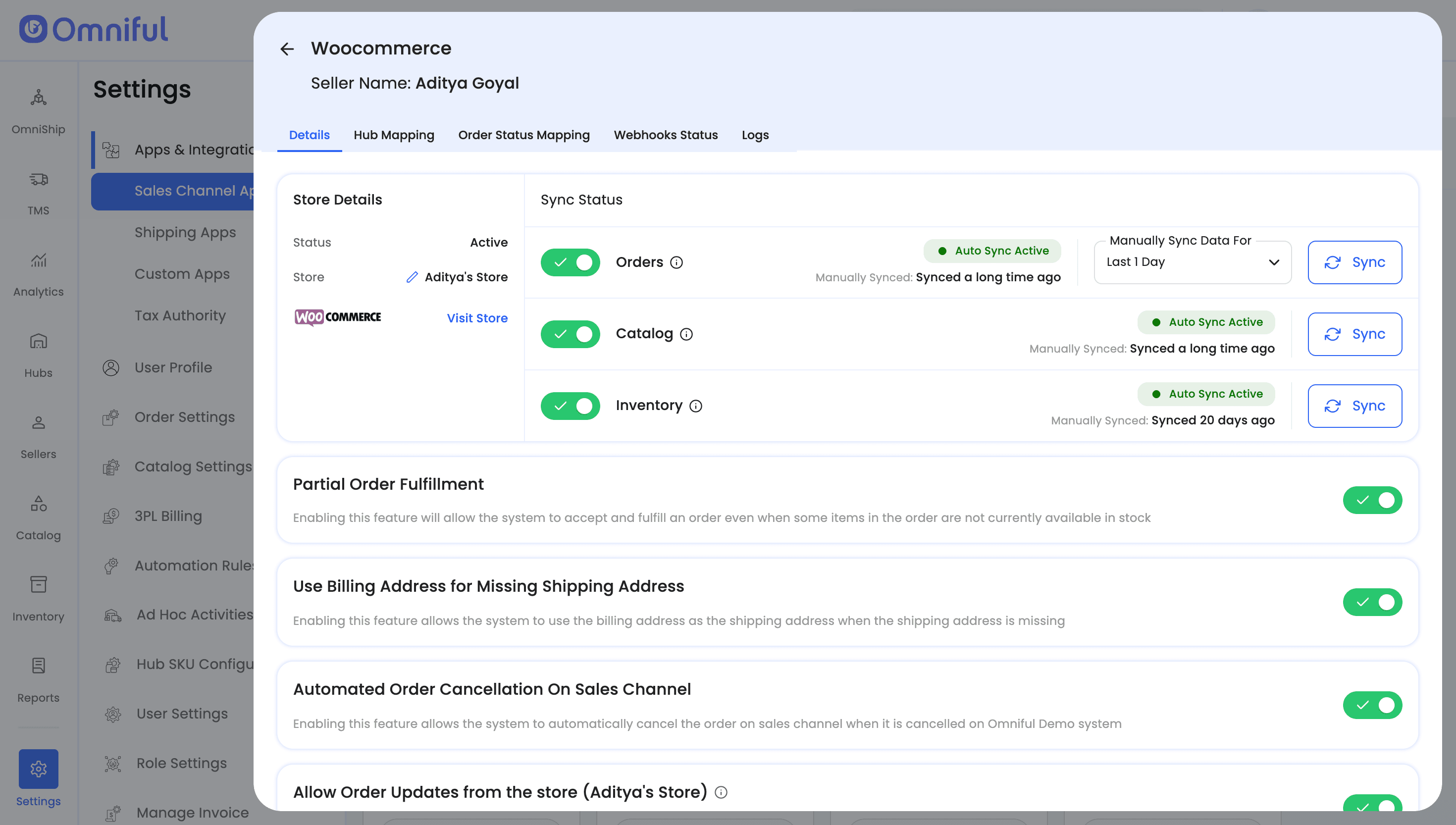
4.1 Store-level settings
Depending on your requirements, you can enable:
- Order Sync – Automatically fetch orders from WooCommerce to Omniful.
- Catalog Sync – Fetch catalog (SKUs) with valid SKU Code from WooCommerce into Omniful.
- Inventory Sync – Push available inventory from Omniful hubs to WooCommerce.
4.2 Hub Mapping
Configure how WooCommerce orders are routed to Omniful hubs: Hub mapping ensures that orders from WooCommerce are fulfilled by the correct physical location and that inventory in that hub is used for allocation.
4.3 Order status mapping
Order Status Mapping defines how WooCommerce statuses and Omniful statuses stay in sync:
- Sales Channel Mapping –
Map incoming WooCommerce order statuses (e.g., Pending, Processing) to internal Omniful order lifecycle stages (e.g., New, In Picking). - Workspace Order Mapping –
Define which outgoing Omniful shipment/order statuses should be pushed back to WooCommerce. (for example, Delivered or Cancelled).
Use Fetch Order Status within the configuration screen to load all available WooCommerce statuses and then map them to Omniful statuses per your operational requirements.
Note: ensure WooCommerce order statuses (such as Pending and Processing) are configured correctly—otherwise new orders may not sync to Omniful. Likewise, if the cancelled status is not mapped, cancelled orders will not sync back to WooCommerce.
5. Data and Sync Behaviour
5.1 Orders
Only orders that match the mapped WooCommerce order statuses will be imported into Omniful.
After import, Omniful assigns the correct hub using the configured Hub Mapping rules.
5.2 Catalog
Seller’s WooCommerce Catalog (SKUs) with valid SKU code is fetched automatically to Omniful when Catalog Sync is enabled.
Omniful receives new and updated information for ‘Active and Live’ SKUs so you can see and use them for order & fulfillment processes in Omniful.
5.3 Inventory
Omniful automatically pushes and maintains inventory level on WooCommerce store when Inventory Sync is enabled.
5.4 Cancellations
Cancellations – When ‘Automated Order Cancellation On Sales Channel’ is enabled, canceling an order in Omniful triggers an automatic cancellation on WooCommerce, keeping both systems aligned.
6. FAQs
Q: My WooCommerce orders are not appearing in Omniful. What should I check?
A: If orders are not syncing, verify the following:
- Order Sync is enabled in Store-Level Settings.
- The order’s WooCommerce status is mapped under Sales Channel Mapping (e.g., WooCommerce Pending → Omniful New).
Q: Why are cancellations from Omniful not reflecting on WooCommerce?
A: For Omniful → WooCommerce cancellations to sync back:
- “Automated Order Cancellation on Sales Channel” must be enabled.
Q: Who is the inventory master?
A: Omniful is the inventory master. Enabling Inventory Sync pushes available stock from Omniful to WooCommerce.
Q: Can I manage multiple warehouses using WooCommerce with Omniful?
A: WooCommerce does not support multi-warehouse on its own, but Omniful enables intelligent routing so orders can be fulfilled from the correct warehouse.
Q: Does WooCommerce support partial fulfillment through Omniful?
A: WooCommerce does not provide partial fulfillment by default. However, Omniful enables partial picking, packing, and shipping, and sends those updates back to WooCommerce.