Supply Chain Management in 2026: OMS, WMS & TMS Explained
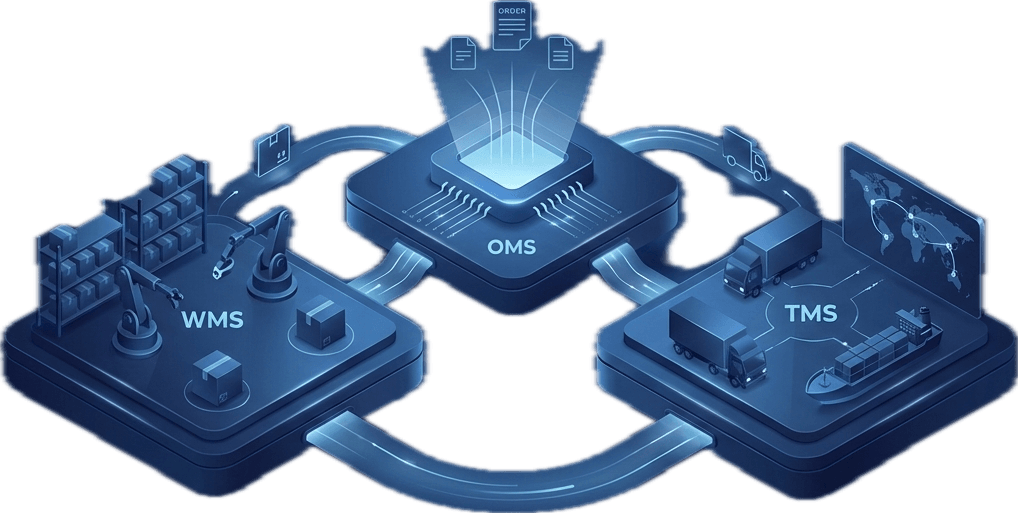
Table of Contents

Share On


Supply Chain Management in 2026: OMS, WMS & TMS Explained
TL;DR
- An order management system in the supply chain acts like a control tower for orders, inventory availability, and promise dates
- It controls order capture, validation, allocation, orchestration, and exception workflows across nodes
- It does not run warehouse tasks or execute transportation; those belong to WMS and TMS
- OMS vs WMS vs TMS: OMS decides and coordinates, WMS executes inside the warehouse, TMS executes transportation and delivery
- If ETAs are wrong, cancellations are high, or backorders are messy, the root cause is often OMS logic plus inventory latency
Introduction
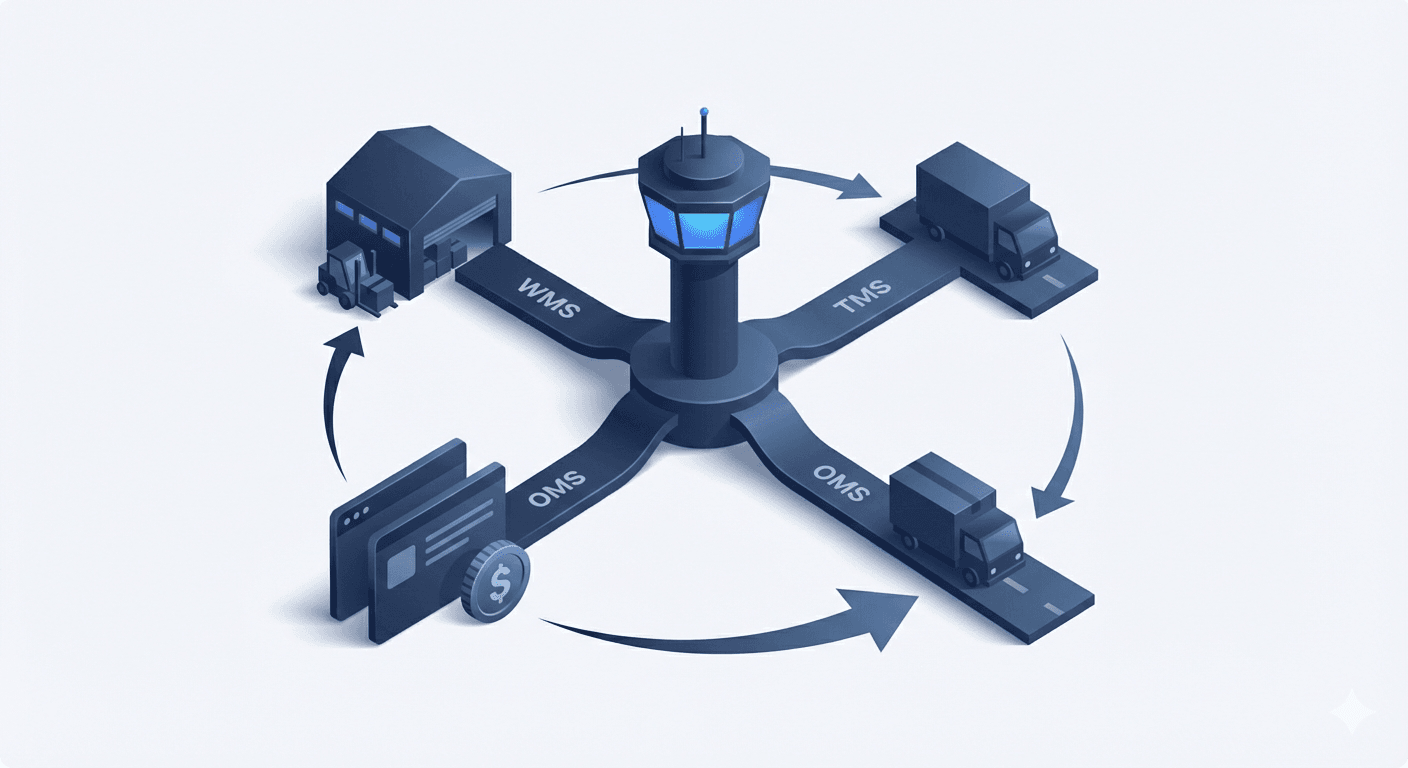
Think of your supply chain like an airport network.
Planes, gates, baggage, and crew all have their own jobs. But without air traffic control, you get delays, confusion, and missed connections.
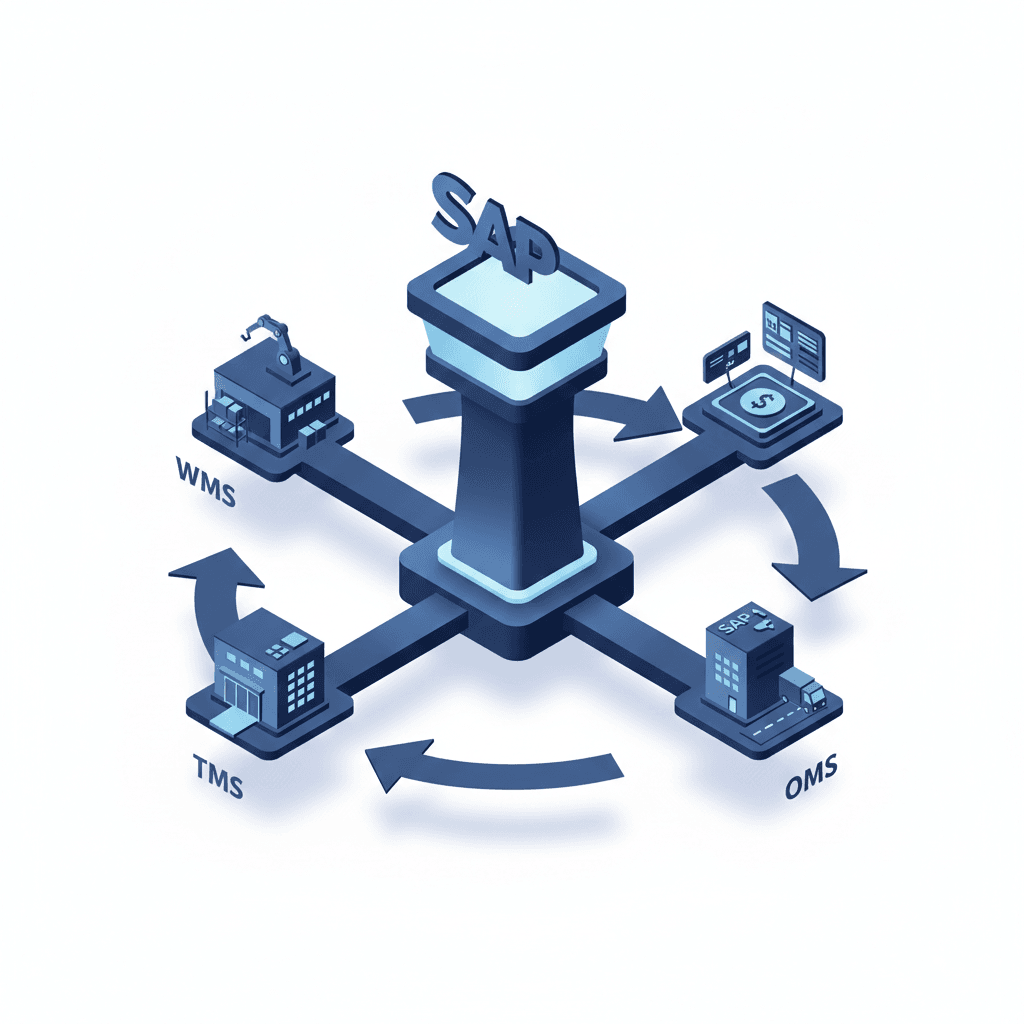
An Order Management System (OMS) plays a similar role. It is the control tower for the order lifecycle in supply chain management. It doesn’t pack boxes or drive trucks. It decides what should happen next, based on rules and real inventory.
Here’s a simple example.
A customer places an order. You have stock in two locations. One can deliver tomorrow. The other can’t.
A strong OMS routes the order to the right node and sets a realistic promise date. A weak one doesn’t. The result is late shipments, cancellations, and support tickets.
So the real question isn’t only “what is order management in supply chain.”
It’s what the OMS truly controls, and where its authority ends.
What an OMS controls in the supply chain
An OMS is not just an order screen. In a mature setup, it controls the logic that turns an order into an executable plan.
Order capture and normalisation
Orders arrive from many sources:
- Web stores
- Marketplaces
- POS systems
- B2B sales reps
- EDI integrations
The OMS captures these orders and converts them into one consistent structure.
What it controls here:
- Order creation and updates
- Line items, quantities, pricing, tax, and discounts
- Customer and address consistency
- Payment status signals such as paid, COD, or authorised
Validation and policy checks
Before fulfilment begins, the OMS applies checks that protect operations and customer experience.
Common validations include:
- Address completeness and serviceability
- Fraud or risk checks (when integrated)
- Product restrictions such as hazmat or age limits
- Payment and credit rules
- Region or delivery eligibility rules
Inventory availability and ATP logic
This is where many OMS programmes succeed or fail.
Key concept: ATP (Available to Promise).
ATP represents what you can confidently commit to new orders after accounting for:
- On-hand stock
- Reserved stock
- Inbound stock (if included)
- Safety stock buffers
- Existing backorders
Inventory availability in OMS terms means not just “is it in stock,” but “can it be fulfilled for this order, right now, from a node that can meet the promise date.”
Allocation and fulfilment node selection
Once ATP is known, the OMS selects where to fulfil from.
Possible nodes include:
- Main warehouses
- 3PL warehouses
- Retail stores
- Dark stores
- Cross-dock locations
Selection rules typically balance:
- Delivery speed
- Cost
- Inventory health
- Cutoff times
- Carrier coverage
Orchestration and release to execution systems
This is the core control-tower role of the OMS.
The OMS can:
- Split orders into multiple shipments
- Hold orders for checks or corrections
- Release fulfilment tasks to WMS or store workflows
- Create shipment requests for TMS or shipping systems
- Track status changes and update all channels
Exception workflows and operational visibility
A strong OMS helps manage the messy middle.
Common exception workflows include:
- No stock after allocation
- Label created but no pickup scan
- Carrier delays beyond thresholds
- Address corrections
- Customer cancellation mid-fulfilment
- Partial shipment decisions
Exceptions should be visible, assignable, and trackable. Otherwise, they end up in Slack threads and spreadsheets.
What an OMS does not control
The control-tower model only works if boundaries are respected.
Warehouse execution details
This is WMS territory.
While the OMS decides what to fulfil and where, it typically does not control:
- Bin-level picking paths
- Pick waves and batching
- Labour assignment and productivity
- Putaway and replenishment
- Packing station workflows
- Cartonisation logic
- Dock scheduling
In short, OMS decides what and where.
WMS executes how inside the warehouse.
Transportation execution
This is TMS territory.
The OMS may request shipping, but it does not usually control:
- Route planning and driver assignment
- Linehaul capacity management
- Last-mile dispatch
- Stop sequencing
- Proof of delivery capture
- Real-time driver tracking
OMS decides ship it.
TMS executes how it moves.
Real-world disruptions
OMS can detect and escalate issues, but it does not control:
- Weather disruptions
- Carrier backlogs
- Customs delays
- Road or airport congestion
What it can do is reduce surprise through early detection.
OMS vs WMS vs TMS
This comparison clarifies the roles without jargon.
OMS (Order Management System)
Purpose: coordinate the order lifecycle end to end
Focus: promises, allocation, orchestration, exceptions
Example: choosing Store A instead of Warehouse B to meet the delivery promise
WMS (Warehouse Management System)
Purpose: run warehouse operations
Focus: inventory accuracy, picking, packing, receiving
Example: generating picklists and confirming packed quantities
TMS (Transportation Management System)
Purpose: run transportation and delivery
Focus: routing, dispatch, delivery tracking
Example: planning driver routes and capturing proof of delivery
A simple way to remember it:
- OMS decides and coordinates
- WMS executes inside the warehouse
- TMS executes on the road
Key workflows where OMS matters most
Some workflows directly impact customer trust and cost.
Available to Promise (ATP)
OMS matters because ATP logic:
- Prevents overselling
- Reduces cancellations
- Keeps channels consistent
Promise date and delivery options
The promise date becomes a trust contract.
OMS can combine:
- Node cutoffs
- Processing time
- Carrier lead times
- Historical lane performance
Backorders
OMS can:
- Manage queue logic
- Allocate inbound stock fairly
- Communicate expected ship dates
- Prevent chaos when stock arrives
Split shipments
OMS sets policies for when splitting is allowed:
- Only when it improves promise dates
- Avoid for low-value orders
- Consolidate when customers prefer fewer packages
Cancellations
OMS can:
- Hold orders before warehouse release
- Re-route to alternate nodes
- Cancel only after defined thresholds
- Log clean cancellation reasons
Returns initiation
Even if returns are processed elsewhere, OMS matters because it:
- Validates return eligibility
- Links returns to original orders
- Triggers labels or instructions
- Keeps channels updated
Common mistakes teams make
Using OMS like a WMS
Trying to manage picking, packing, and bins inside OMS creates poor workflows.
Fix: let OMS orchestrate, let WMS execute.
Missing exception management
If only the happy path is automated, teams still live in spreadsheets.
Fix: build exception workflows with ownership and SLAs.
Ignoring inventory latency
Inventory updates are not instant. Ignoring this causes oversell.
Fix: measure latency, use buffers, enforce reservations.
Over-splitting to chase speed
Splitting reduces ETAs but increases cost and support tickets.
Fix: make splitting a policy, not a default.
Promise dates driven by marketing
Promising next-day delivery without checking cutoffs and lanes breaks trust.
Fix: base promise logic on real constraints.
What to look for when choosing an OMS
Capabilities checklist
Look for:
- Multi-channel order capture
- ATP and availability logic
- Fulfilment node selection
- Orchestration across WMS and carriers
- Backorder handling
- Split shipment rules
- Returns initiation
- Exception workflows with SLAs
- Audit logs
Integration readiness
Check for:
- Event-based APIs
- Webhooks or near-real-time sync
- Standard commerce and carrier connectors
- Clear data models for orders and shipments
- Inventory reservation support
Reporting and control-tower visibility
Your OMS should answer:
- Which orders are at risk today?
- Where are promise dates failing?
- Which nodes create the most exceptions?
- Which SKUs cause backorders?
Mini scenario: Online order fulfilled from store
A customer places an order online. The warehouse is low on stock, but a nearby store has inventory.
Healthy setup
- OMS captures and validates the order
- ATP is calculated across nodes
- Store is selected to meet the promise date
- Fulfilment task is released
- Inventory is reserved and deducted
- Shipping is requested
- Tracking flows back
- Exceptions trigger if scans are missing
Weak setup
- Store inventory is stale
- OMS allocates incorrectly
- Store can’t find stock
- Order cancels
- Support lacks a clear reason
- Customer leaves
Same order. Different outcome. The difference is OMS logic plus data freshness.
Control Tower Cheat Sheet
Controls
- Order capture and validation
- ATP and availability decisions
- Fulfilment node selection
- Orchestration to WMS and TMS
- Promise date logic
- Exception workflows
Coordinates
- Status updates across channels
- Backorders and partial fulfilment
- Cancellations and changes
- Returns initiation
Does not do
- Warehouse execution details
- Transportation execution
- Carrier network performance
Five metrics to watch
- Promise date hit rate
- Cancellation rate due to stock issues
- Inventory latency
- Exception ageing
- Split shipment rate
FAQ
What is order management in supply chain?
It is the process of capturing, validating, allocating, and coordinating orders across inventory, fulfilment, and delivery networks.
What does an order management system supply chain control?
It controls orchestration: ATP, allocation, promise dates, exceptions, and cross-system coordination.
Does an OMS manage warehouse picking and packing?
No. That is handled by a WMS.
Does an OMS manage delivery routes and drivers?
No. That is handled by a TMS or carrier systems.
OMS vs WMS vs TMS — what’s the difference?
OMS decides and coordinates, WMS executes warehouse work, and TMS executes transportation.
How does OMS reduce cancellations?
By improving ATP accuracy, routing correctly, and managing exceptions early.
What is ATP in OMS terms?
ATP is the quantity you can promise to new orders while still meeting delivery commitments.
When should a business invest in a stronger OMS?
When ETAs are unreliable, cancellations are frequent, backorders are messy, or support teams lack visibility.
Conclusion
An OMS is the control tower of the order lifecycle in supply chain management. It controls order capture, validation, ATP decisions, allocation, orchestration, and exceptions. It does not run the warehouse floor or delivery fleet.
A practical next step is to map your current order lifecycle. Identify where promise dates fail, where inventory latency causes oversell, and where exceptions are handled manually.
If you are evaluating modern OMS platforms, solutions like Omniful support this control-tower model by unifying orders, inventory, fulfilment nodes, and exceptions in one structured view.
The goal is simple: fewer cancellations, better ETAs, and fewer surprises for both customers and operations.
Share On