Omnichannel Order Management in 2026: How to Unify Orders, Inventory, and Fulfillment Across Every Channel
Table of Contents

Share On


What Omnichannel Order Management Actually Requires
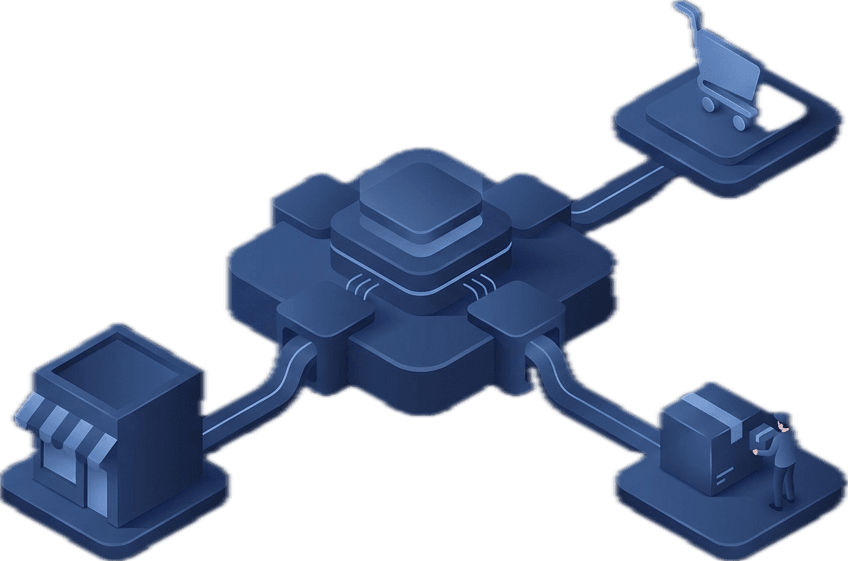
Omnichannel order management is frequently misunderstood as multi-channel order collection. It isn't. Collecting orders from multiple channels is table stakes. The harder problem is orchestrating fulfillment across multiple inventory locations, fulfillment nodes, and carrier relationships — consistently, at the order level, for every order.
True omnichannel order management requires the following:
Unified inventory visibility across every fulfillment node. Your OMS needs to know not just how many units of a SKU exist, but where they are — in which warehouse, store, 3PL, or dark store — and which of those are available to commit to a new order. Without this, you oversell, misfulfill, or carry unnecessary safety stock at every node.
Configurable order routing logic. When an order arrives from your DTC channel at 2 AM, your system needs to decide automatically: route to the nearest warehouse, split across two locations, fulfill from the closest store, or hand off to your 3PL. This routing logic must be configurable by channel, SKU, geography, service level agreement, and cost parameters — not hardcoded.
WMS integration for execution. Routing an order to a warehouse is only half the decision. The order also needs to translate into a pick-pack-ship task that the warehouse management system executes. If your OMS and WMS don't share real-time data, orders get routed to locations that can't execute them efficiently, and inventory records diverge.
Carrier and delivery orchestration. Once an order is picked and packed, the fulfillment operation hands it to a carrier. Which carrier, which service level, which label format, which tracking data gets pushed back to the customer — all of this needs to be automated and connected through your transportation layer. An OMS that ends at "order dispatched" is incomplete.
Returns and exception handling. Omnichannel operations generate returns at scale. A returned item from an online order that lands at a retail store needs to be assessed, re-inventoried, and made available to the next channel. Your OMS needs reverse logistics logic, not just forward fulfillment logic.
Why Most OMS Platforms Fall Short for Omnichannel Operations
The majority of OMS platforms on the market were built to solve a specific problem — usually high-volume D2C ecommerce or marketplace aggregation — and then expanded their feature sets incrementally. The result is systems that do some things very well and create friction at the boundaries.
Single-channel-first architectures. Many OMS platforms were originally built for Shopify or Amazon merchants. They handle orders from those channels efficiently but struggle with the logic complexity of simultaneous B2B, retail, and D2C order flows that have different SLAs, pricing rules, and fulfillment paths.
Shallow WMS integration. The most common failure mode is an OMS that can route orders but can't synchronize warehouse execution. This creates inventory divergence — the OMS thinks 200 units are available in Warehouse A, but the WMS has already committed 60 of them to another order the OMS doesn't know about yet. The result is overselling, misfulfillment, and costly manual reconciliation.
No native carrier orchestration. Many OMS platforms hand off to a separate shipping tool (ShipStation, EasyPost, etc.) for carrier selection and label generation. This creates another integration seam — one more system that needs to be kept in sync with inventory and fulfillment data. When that integration is brittle or delayed, shipments miss SLAs.
Weak support for non-warehouse fulfillment nodes. Store-based fulfillment, dark store fulfillment, and drop-ship from supplier all require OMS logic that goes beyond "route to your DC." Most platforms support these as bolt-on configurations rather than native capabilities — meaning they work until you scale, then create operational drag.
Poor visibility for operators. Disconnected systems produce disconnected data. An operations team managing omnichannel order flows needs a single view of inventory position, order status, fulfillment progress, and carrier status — not four logins to four systems to reconstruct what happened to a specific order.
The Inventory Visibility Problem That Breaks Omnichannel Fulfillment
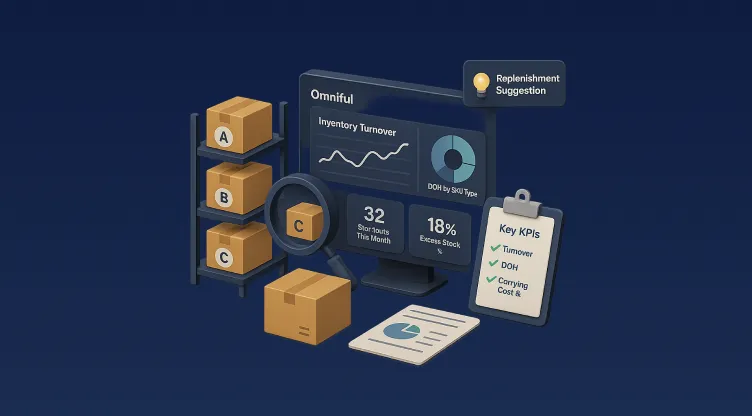
Inventory visibility is the foundation of omnichannel order management. It's also the most commonly misunderstood piece of the puzzle.
Most operators have some visibility into inventory — their WMS shows warehouse stock, their Shopify store shows available inventory, their 3PL portal shows their 3PL units. The problem is that these are three different snapshots of inventory, updated at different intervals, using different SKU and location IDs, with different rules about what counts as "available."
When your OMS routes an order based on stale or incomplete inventory data, the results are predictable: overselling on high-demand SKUs, underselling on inventory that's actually available, and fulfillment failures that trigger expedited shipping costs or customer service escalations.
What genuine inventory visibility looks like for omnichannel operations:
- Single inventory ledger updated in real time across every channel and fulfillment node
- Available-to-promise (ATP) logic that accounts for committed inventory, in-transit stock, and buffer rules by node and channel
- Location-level granularity — not just "200 units in Warehouse A" but "200 units across 3 bin locations, 40 of which are reserved for B2B orders with priority routing"
- Channel-specific allocation rules — some SKUs should always be available for retail replenishment; others should prioritize D2C; others should be held in reserve for wholesale accounts
- Bi-directional WMS sync — inventory updates from the WMS (picks, receipts, adjustments) flow immediately to the OMS, and OMS commitments flow immediately to the WMS
Solving this requires tight integration between your OMS and your WMS — or a platform that manages both layers natively.
How Order Routing Logic Should Work Across Channels
Order routing is the intelligence layer of omnichannel order management. When a customer places an order, the routing engine should be making the following decisions automatically:
Which fulfillment node? Based on proximity to the delivery address, available inventory, node capacity, and SLA requirements. A customer ordering in Dallas shouldn't be fulfilled from a New Jersey warehouse if your Texas 3PL has the inventory and can hit the same delivery window at lower cost.
Split shipment or single shipment? If the full order can't be fulfilled from a single node, should it be split across two locations? What are the cost and customer experience trade-offs? A good routing engine has configurable split-shipment rules — some operators never split, some always split if it improves delivery speed, some split only if the shipping cost delta is below a threshold.
Which fulfillment mode? Warehouse fulfillment, store fulfillment, dark store fulfillment, or drop-ship from supplier. Each mode has different execution requirements, cost profiles, and SLA implications. Your routing engine should evaluate them systematically based on configured priority rules.
Which service level? Standard, expedited, same-day. The routing logic should factor in carrier options available from each node, the promised delivery date, and the cost of each option — then select automatically or surface the decision to an operator with relevant context.
When to re-route? If a fulfillment node can't execute an order that was routed to it — due to stock discrepancy, capacity issue, or system error — the OMS should be able to automatically re-route to the next-best option rather than holding the order in a failed state.
Getting this routing logic right requires deep configurability in the OMS, not just basic "route to nearest warehouse" rules. And it requires real-time data from the WMS and TMS to make routing decisions that are accurate and operationally achievable.
What to Look for in an Omnichannel OMS
Evaluating OMS platforms for omnichannel operations requires different criteria than evaluating for a single-channel ecommerce operation. Here's what matters:
Channel Coverage and Connectivity
The OMS must natively support every channel you operate across: D2C ecommerce (Shopify, Magento, custom), marketplaces (Amazon, Walmart, TikTok Shop), B2B/wholesale portals, physical retail POS systems, and any 3PL or dark store node. Evaluate the depth of each connection — native integration or API-dependent middleware?
Inventory Availability Logic
Ask specifically how the platform handles available-to-promise calculation. Can you set allocation rules by channel and SKU? Does it update in real time as WMS picks are confirmed? Can you configure buffer stock rules by node? Weak ATP logic is the root cause of most omnichannel inventory failures.
Fulfillment Node Flexibility
Can the OMS manage orders fulfilled from warehouses, retail stores, dark stores, 3PLs, and suppliers simultaneously? What's the configuration process for adding a new fulfillment node? How does it handle node-specific SLAs and constraints?
WMS Integration Quality
This is frequently undersold in vendor demos. Ask specifically: how does inventory sync work between OMS and WMS? What is the update frequency? How are discrepancies handled? Can the WMS push real-time pick confirmation back to the OMS to update order status?
Carrier and TMS Connectivity
Does the OMS connect to your carrier accounts directly, or does it require a separate shipping platform? Can it access multi-carrier rate shopping from within the routing decision? How does carrier selection integrate with fulfillment node selection?
Reporting and Operational Visibility
A single dashboard showing order status, inventory position, fulfillment performance, and carrier SLA adherence across all channels. If the OMS requires your team to log into separate systems to get a complete operational picture, that's an integration gap that will cost you hours per week.
How WMS and TMS Fit Into Omnichannel Order Management
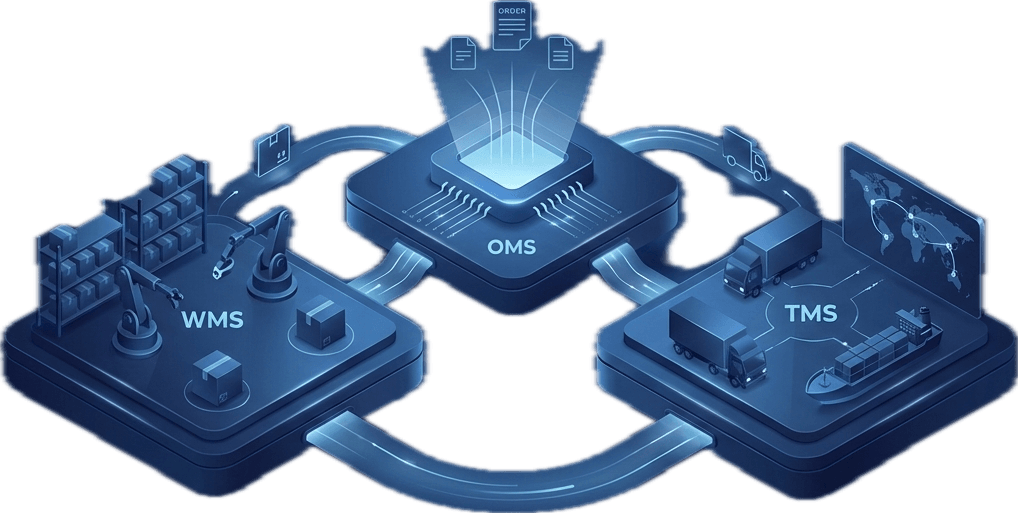
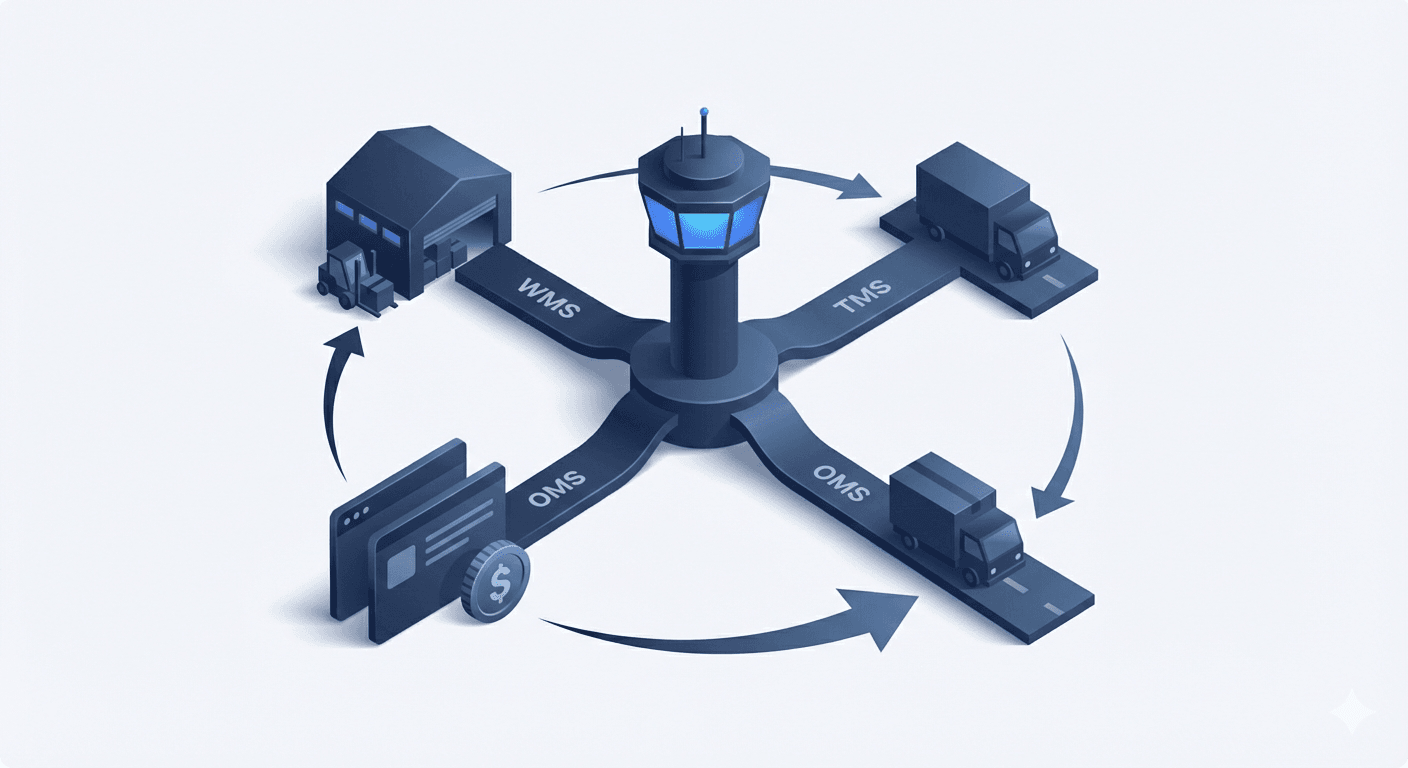
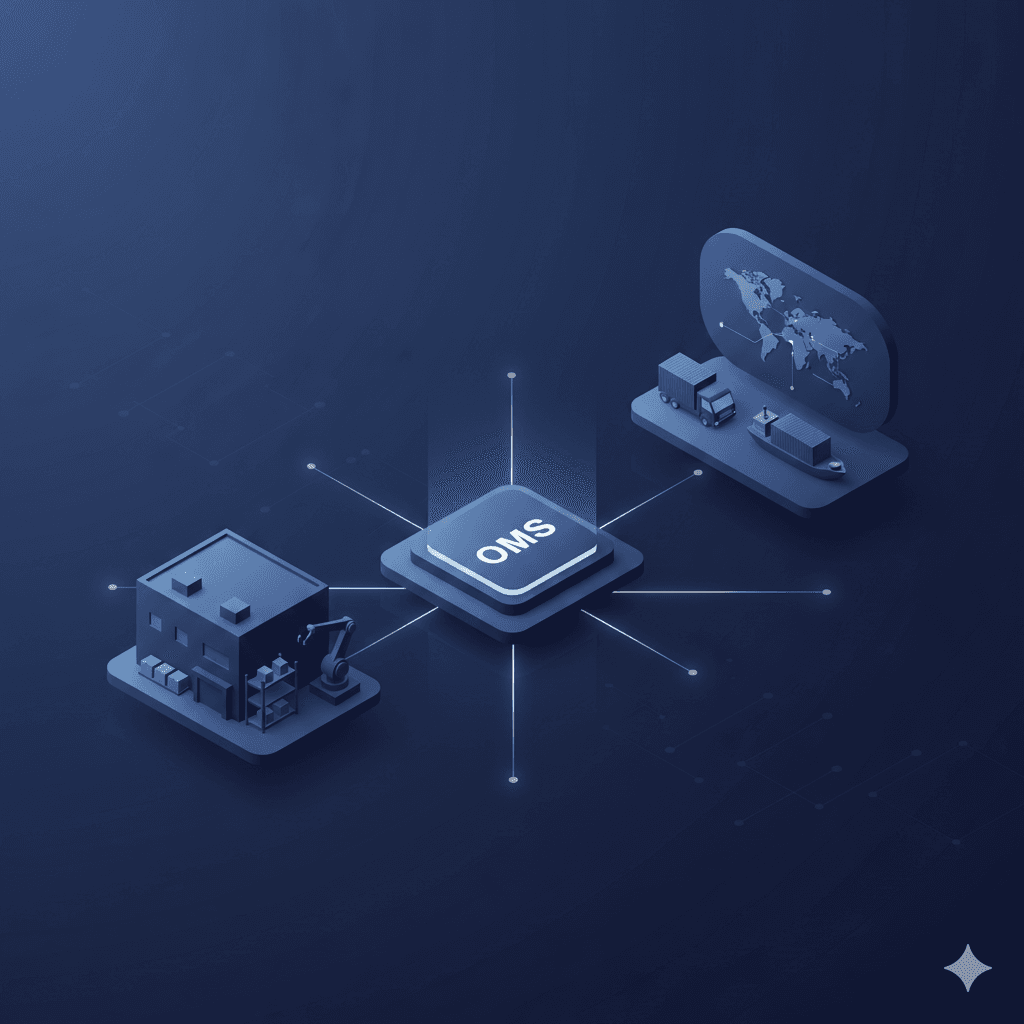
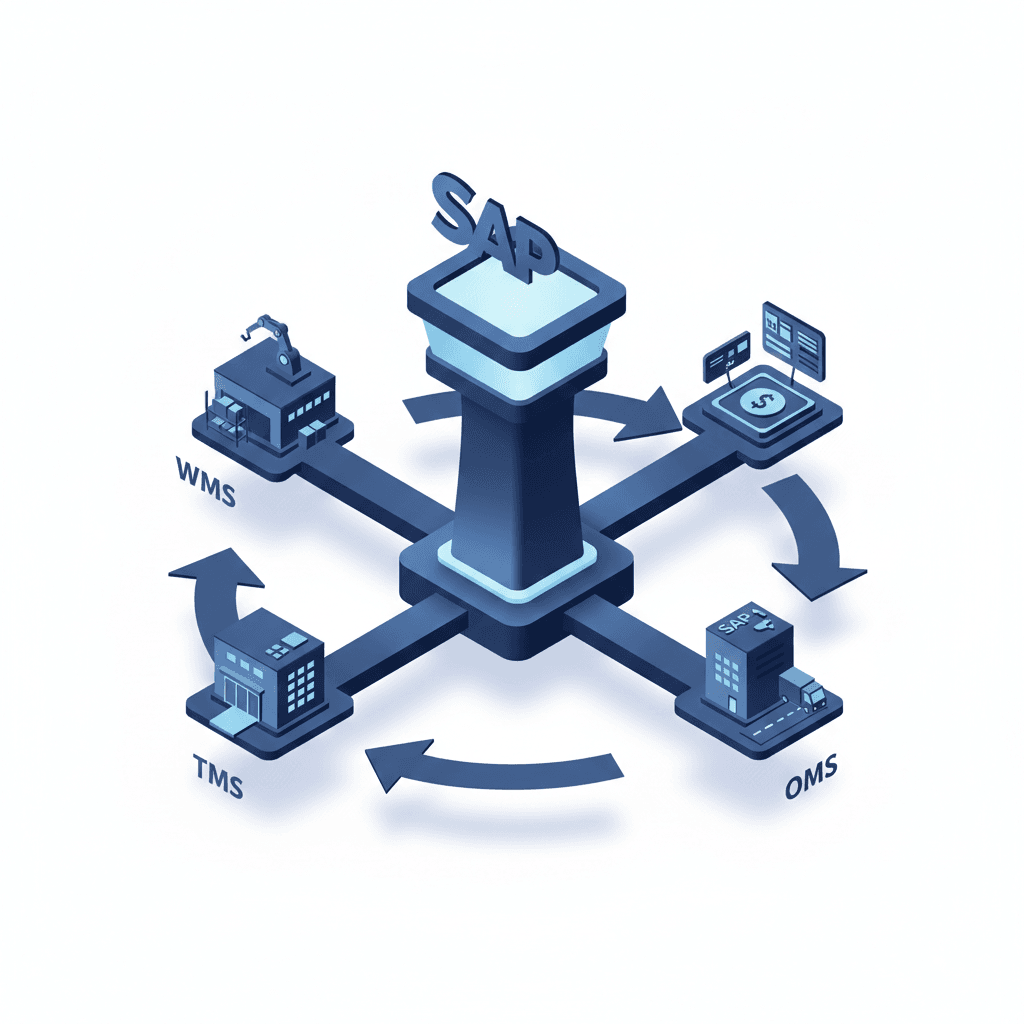
An OMS is not a complete fulfillment operating system. It's the decision and orchestration layer — but it depends on a WMS for execution and a TMS for delivery. Understanding how these three systems relate to each other is essential for evaluating any omnichannel software investment.
WMS role in omnichannel: Once the OMS routes an order to a fulfillment node, the WMS takes over. It generates the pick task, directs the picker to the right bin location, manages the packing workflow, and confirms shipment readiness. The WMS also updates inventory quantities as stock is moved, received, or adjusted. Without real-time OMS-WMS sync, the OMS is making routing decisions based on inventory data that's minutes or hours out of date.
TMS role in omnichannel: Once the WMS confirms an order is packed and ready to ship, the TMS (or carrier orchestration layer) selects the carrier, generates the label, books the pickup, and begins tracking. It routes shipment data back to the OMS (which updates the customer with tracking information) and captures freight cost data for reporting. For operators with high shipping volumes, the TMS layer also enables carrier rate shopping, load optimization, and SLA-based carrier selection that can meaningfully reduce freight spend.
Why disconnected systems are costly: Many operators run separate WMS, OMS, and TMS tools from different vendors. Each integration point is a potential failure mode. When the OMS doesn't know what the WMS has picked, and the TMS doesn't know what the OMS has routed, the operational team spends significant time manually reconciling exceptions. At scale, this is not just inefficient — it's a ceiling on growth velocity.
Platforms that manage WMS, OMS, and TMS in a unified architecture eliminate these integration seams. Order routing, warehouse execution, and carrier selection share the same data model, update in real time, and don't require middleware or manual reconciliation. For operators scaling across channels and regions, this architectural choice compounds in operational advantage over time.
Common Implementation Mistakes in Omnichannel Order Management
Getting the software right is half the battle. The other half is implementation. These are the mistakes that reliably slow down omnichannel OMS deployments:
Mapping only the happy path. Most implementations focus on how a standard order flows from checkout to delivery. The operational complexity is in the exceptions: cancellations mid-fulfillment, partial inventory availability, address correction after routing, returns to non-origin nodes. Build these flows before go-live, not after.
Not cleaning inventory data before launch. Launching an omnichannel OMS on top of inaccurate inventory data amplifies the inaccuracy across every channel. Conduct a physical inventory count, reconcile WMS and OMS records, and establish a process for ongoing reconciliation before routing live orders.
Underestimating channel-specific configuration. Each sales channel has its own order format, cancellation window, SLA, and exception-handling requirement. Amazon B2B, Shopify D2C, and a wholesale portal all behave differently. Configuration time is typically underestimated by 30–50% in initial project scopes.
Not establishing routing rules before go-live. Routing logic needs to be configured, tested, and validated with real inventory and order data before you route live customer orders through it. A misconfigured routing rule at scale can send thousands of orders to the wrong node in minutes.
Treating the OMS as a standalone system. OMS success depends on the quality of its integration with WMS and TMS. If those integrations are treated as afterthoughts — "we'll connect WMS later" — the OMS will route orders it can't execute reliably. Plan all three integrations together, not sequentially.
Frequently Asked Questions
What is the difference between an OMS and a WMS?
An OMS (Order Management System) handles the decision layer of fulfillment: receiving orders from channels, checking inventory availability, routing orders to the right fulfillment node, and tracking order status through to delivery. A WMS (Warehouse Management System) handles the execution layer inside a specific warehouse or DC: directing picks, managing bin locations, controlling packing workflows, and confirming shipments. They serve adjacent but distinct functions. For omnichannel operations, both are required — and their integration quality determines how reliably orders are fulfilled.
Can I run omnichannel order management on Shopify alone?
Shopify handles order aggregation across Shopify channels well, but it isn't designed to route orders across multiple fulfillment nodes (warehouse, store, dark store, 3PL), manage ATP logic across non-Shopify inventory locations, or connect to a WMS for execution. Shopify is a commerce platform with order management features — not a standalone omnichannel OMS. As your channel and fulfillment complexity grows, you'll need a dedicated OMS layer.
How many fulfillment nodes can an OMS typically manage?
This varies significantly by platform. Enterprise OMS platforms can manage dozens or hundreds of nodes. Mid-market platforms typically support between 5 and 50 fulfillment nodes with full routing logic. When evaluating, ask specifically about node capacity and whether routing logic remains configurable at your target scale — some platforms degrade in performance or configurability beyond a certain node count.
What is available-to-promise (ATP) and why does it matter for omnichannel?
ATP is the inventory quantity that an OMS makes available for commitment to new orders at any given moment, after accounting for existing commitments, safety stock buffers, and channel-specific allocation rules. For omnichannel operations, accurate ATP prevents overselling, ensures inventory is allocated correctly across competing channels, and reduces costly expedite situations caused by routing orders to locations with insufficient stock.
How long does an omnichannel OMS implementation typically take?
For a mid-market operator with 2–5 sales channels and 1–3 fulfillment nodes, expect 6–12 weeks for a well-scoped implementation with clean data. Complexity increases significantly with more channels, more fulfillment nodes, complex routing rules, and the need for custom WMS or ERP integrations. Implementations that rush the channel configuration and routing rule setup phases almost always extend timelines.
Do I need a TMS if I already have an OMS?
It depends on your shipping volume and complexity. If you ship fewer than 500 orders per day with a small set of carrier accounts, your OMS's native carrier integration may be sufficient. If you're managing multi-carrier rate shopping, carrier SLA tracking, freight cost reporting, or complex delivery orchestration (same-day, last-mile, cross-border), a TMS layer adds meaningful operational value — and your OMS needs to connect to it cleanly.
Building Omnichannel Operations That Scale
Omnichannel order management is an infrastructure decision, not just a software purchase. The platform you choose determines how well your warehouse, order, and delivery operations talk to each other — and that determines how fast you can grow without adding operational complexity linearly.
The operators who get this right share a few traits: they treat inventory visibility as foundational before routing logic, they test exception flows before go-live, and they choose platforms that manage WMS and TMS in the same data environment as OMS — or invest seriously in the integrations between them.
For brands navigating this decision, the question worth asking isn't "which OMS has the best feature list?" It's "which platform gives us a single operational view across warehouse, order, and delivery — and lets us add channels and fulfillment nodes without re-platforming?"
Ready to see what unified omnichannel order management looks like in practice?
Omniful is built for operators who run complex, multi-channel fulfillment operations and need WMS, OMS, and TMS to work as a single system — not three tools patched together. If you're evaluating your omnichannel order management stack, book a demo with Omniful to see how unified operations change what's possible at scale.
Share On