Transport Management System Insights for MENA in 2026

Table of Contents

Share On


Transport Management System Insights for MENA in 2026
A Transport Management System is becoming a strategic requirement for logistics leaders across MENA, not just an operational tool. As Saudi Arabia, the UAE, Qatar, and the wider region invest in smarter logistics infrastructure, digital transport programs, and stronger trade connectivity, businesses are under growing pressure to improve freight visibility, route efficiency, cost control, and delivery performance. (mot.gov.sa)
This article explains the transportation analytics trends shaping MENA in 2026, what they mean for retailers, distributors, 3PLs, and enterprise supply chains, and how a modern Transport Management System helps teams make faster, better logistics decisions. It also covers the KPIs that matter, practical use cases, and what business leaders should look for when evaluating transport management software for regional growth.
Why transport analytics matters more in MENA in 2026
Logistics operations in MENA are becoming more complex for a simple reason: the region is moving faster.
Saudi Arabia’s National Transport and Logistics Strategy is built around turning the Kingdom into a global logistics hub. Qatar has launched a dedicated transport and logistics digital transformation roadmap with 39 strategic initiatives and a transformation office. The UAE has also increased its focus on logistics integration and digital coordination through a national logistics integration council. (mot.gov.sa)
For businesses, that means transport performance can no longer be managed with delayed reports and manual coordination alone. Leaders need timely transport analytics to answer questions such as:
- Where are delays happening?
- Which routes are underperforming?
- Which carriers are increasing cost without improving service?
- Which hubs or delivery zones create repeated exceptions?
- How can delivery promises be improved without raising freight spend?
This is where a Transport Management System becomes valuable. It gives teams one operational layer for planning, execution, visibility, control, and analysis.
Top Transport Management System trends shaping MENA
Real-time freight visibility is now expected
Visibility is moving from “nice to have” to operational baseline.
Businesses increasingly expect live status updates for shipment creation, dispatch, in-transit movement, arrival, proof of delivery, delays, and exceptions. This is especially important as the region strengthens corridor connectivity and multimodal logistics speed. One recent example is Dubai’s new green corridor with Oman, which aims to accelerate sea-air cargo movement and streamline freight flows. (The Times of India)
What this changes for operators
A TMS should help teams:
- Track shipment milestones in real time
- Detect route deviations early
- Flag late pickups or late arrivals
- Share one status view across operations and customer-facing teams
Delivery performance analytics is becoming more granular
In 2026, businesses want more than a basic on-time delivery number.
They want to understand delivery performance by:
- Carrier
- Route
- Zone
- Hub
- Service type
- Customer segment
- Fulfillment source
That shift matters because one overall KPI can hide many performance problems. A route may look acceptable at city level while consistently failing in certain zones or at specific time windows.
Route optimization analytics is moving beyond shortest distance
Route planning is no longer just about minimizing kilometers.
Businesses now need route optimization analytics that compare:
- Planned vs actual transit time
- Cost vs service trade-offs
- Stop density
- Time spent per drop
- Delivery success by route
- Capacity utilization by trip
This helps teams understand whether a route is efficient in practice, not just efficient on paper.
Exception management is becoming a major use case
The most effective logistics teams now treat exceptions as patterns, not isolated issues.
A late arrival, repeated failed delivery attempt, missing proof of delivery, or recurring carrier delay should automatically trigger action. This is why TMS insights increasingly focus on exception visibility and resolution speed.
High-value exceptions to monitor
- Repeated delivery failures
- Shipment stuck at hub
- Route deviation
- Delayed linehaul movement
- Underutilized vehicle capacity
- Carrier SLA breach
- Missing delivery confirmation
Cost intelligence is moving closer to daily operations
Freight cost analysis used to be mostly retrospective.
Now, teams want daily insight into:
- Cost per shipment
- Cost per route
- Cost per carrier
- Cost per kilogram
- Reattempt cost
- Empty-run percentage
- Cost-to-serve by region or customer type
That change is important in MENA, where transport networks often combine urban last-mile density, long intercity movement, and cross-border complexity.
Cross-system integration is becoming essential
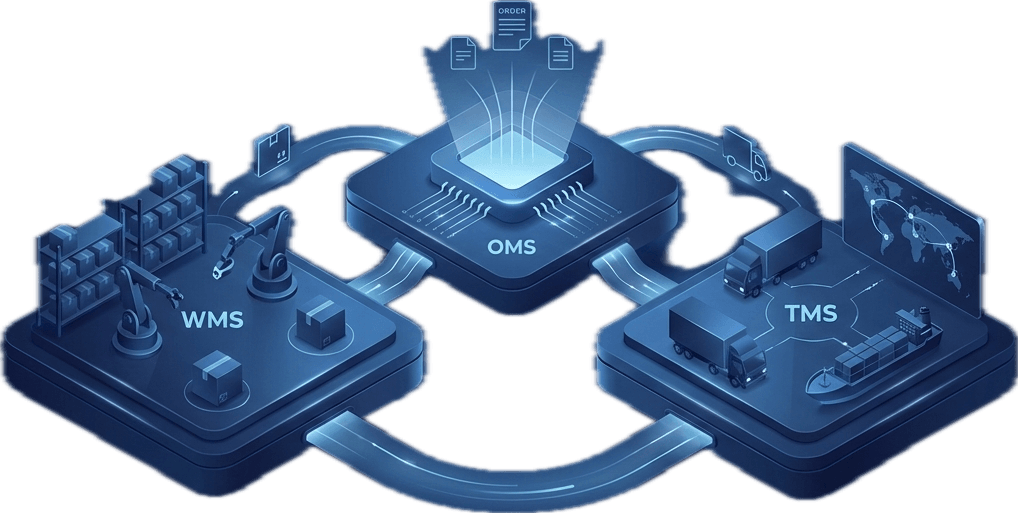
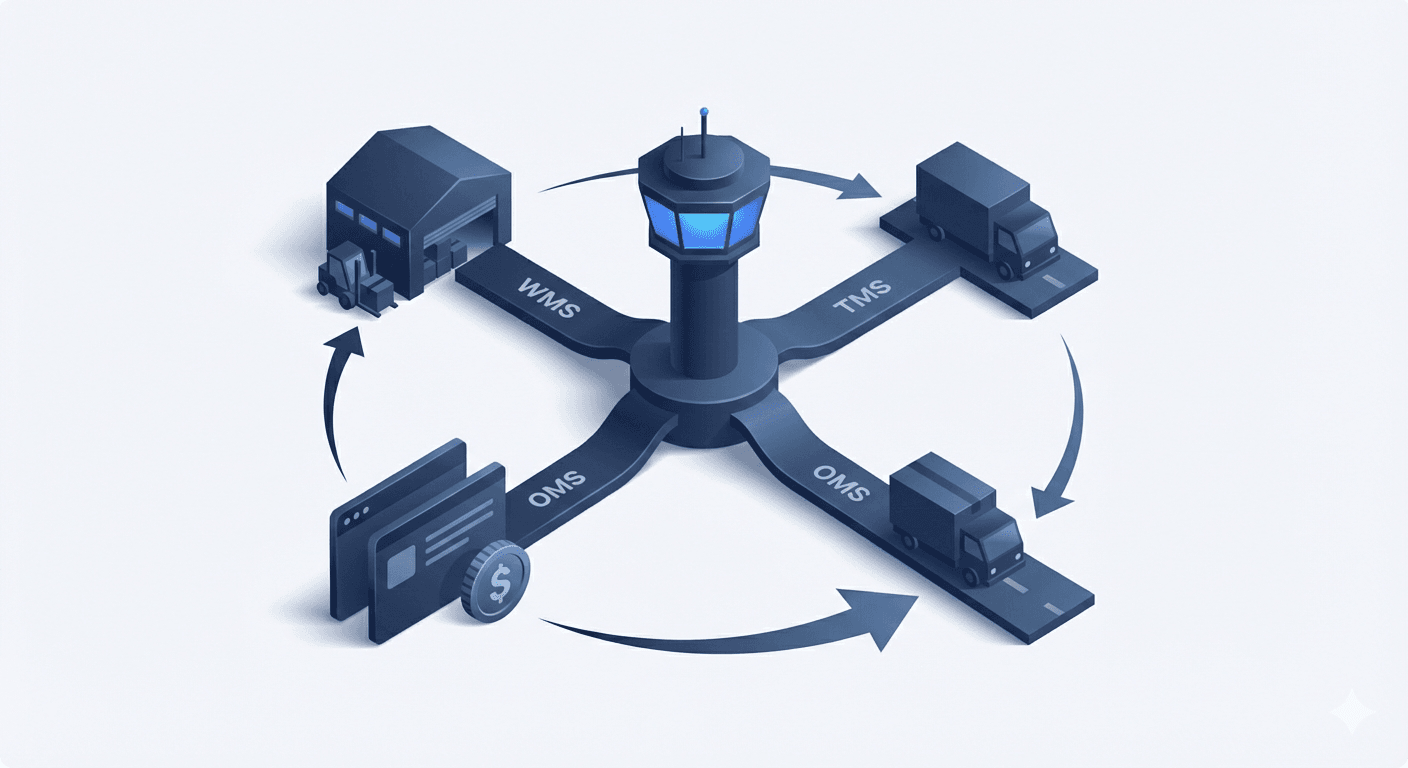
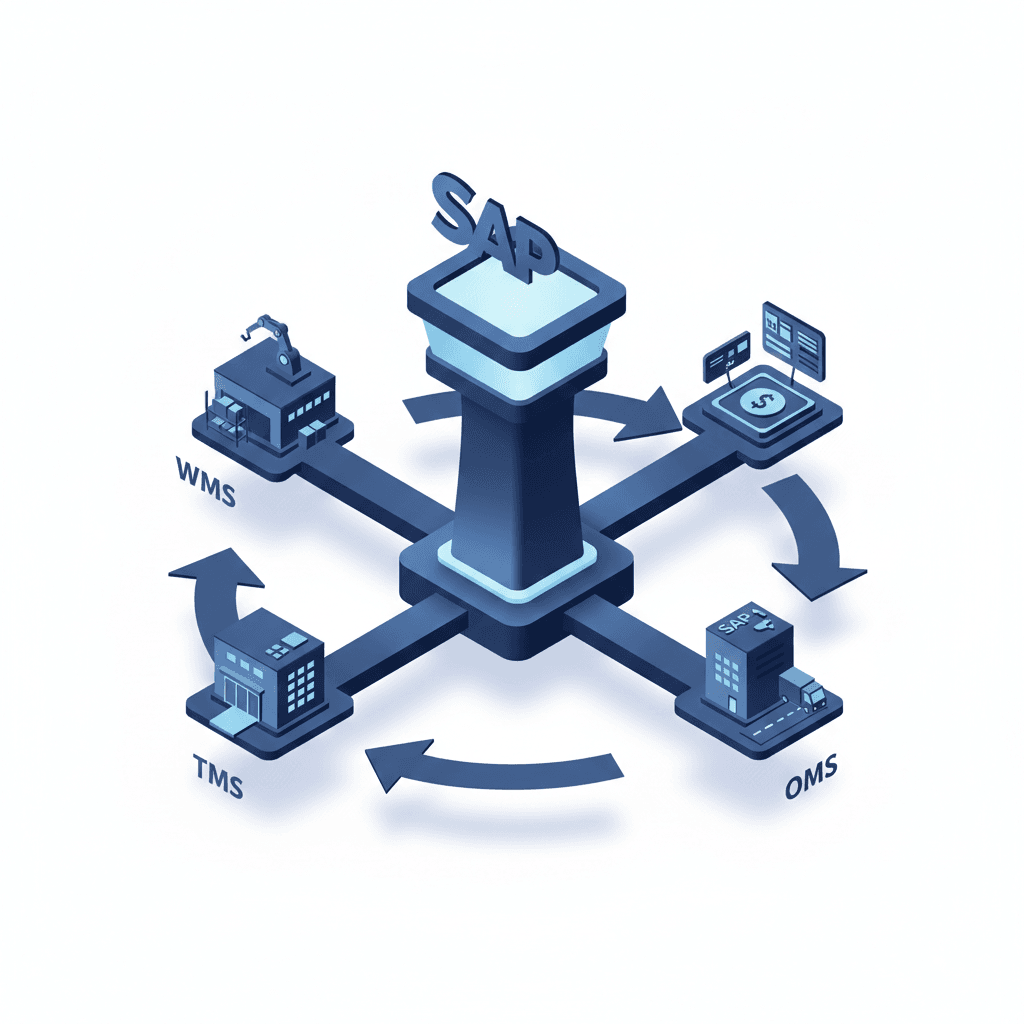
A Transport Management System creates more value when it is connected to OMS, WMS, ERP, and customer communication tools.
That is because transport issues often begin outside transport itself. A late shipment may be caused by a late warehouse release, poor inventory readiness, cutoff misalignment, or documentation gaps. Integrated systems make those root causes easier to spot and fix.
Resilience and continuity are now part of transport strategy
Transport strategy in 2026 is not only about speed and cost. It is also about continuity.
Saudi transport authorities explicitly reference business continuity and emergency readiness in their strategy direction. That reinforces the need for systems that can support rerouting, alternate allocation, risk visibility, and performance monitoring during disruption. (tga.gov.sa)
What business leaders want from TMS insights
Most leadership teams do not want more dashboards. They want better decisions.
The most useful TMS insights answer a small set of critical business questions.
Where are we losing service quality?
Look at:
- On-time delivery by route
- Delays by carrier
- Delivery failure zones
- Missed customer windows
- Hub bottlenecks
Where are we losing money?
Look at:
- High-cost lanes
- Underutilized trips
- Reattempt-heavy areas
- Cost variance by carrier
- Freight invoice mismatches
What should we change next?
Good transport analytics should lead to actions such as:
- Reassigning a lane
- Changing carrier allocation
- Adjusting route plans
- Revising hub cutoffs
- Tightening alert thresholds
- Fixing repeated exception causes
That is the difference between reporting and decision support.
Key metrics to track in a Transport Management System
A strong Transport Management System should make the most important metrics easy to access and easy to trust.
Service metrics
- On-time pickup rate
- On-time delivery rate
- First-attempt delivery success
- Average transit time
- Actual vs promised delivery time
- Delay reason distribution
Visibility metrics
- Milestone completion rate
- Shipment status accuracy
- Proof of delivery completion rate
- Exceptions per 100 shipments
- Average exception resolution time
Cost metrics
- Cost per shipment
- Cost per route
- Cost per carrier
- Cost per kilogram
- Empty-run percentage
- Reattempt cost
Network and carrier metrics
- Carrier acceptance rate
- Carrier SLA compliance
- Lane reliability
- Route adherence
- Vehicle utilization
- Hub turnaround time
Executive summary metrics
For CXOs, the most useful summary often includes:
- Total shipments moved
- On-time delivery trend
- Cost per shipment trend
- Worst-performing lanes
- Lowest-performing carriers
- Top exception causes
- Priority improvement actions
How a Transport Management System improves logistics efficiency
A Transport Management System improves logistics efficiency because it combines execution with intelligence.
Instead of managing transport through disconnected spreadsheets, calls, emails, and static reports, a TMS helps teams run a more structured operation.
Better visibility
Teams can see where shipments are, what milestones are complete, and where intervention is needed.
Stronger planning
Teams can compare planned routes against actual outcomes and continuously improve allocation logic.
Faster exception response
Alerts help operations teams act before a delay becomes a customer escalation.
Better carrier management
Carrier scorecards become measurable and comparable, not anecdotal.
Improved cost control
Finance and operations can track freight cost by route, carrier, or shipment profile.
Example use case
A business operating in Saudi Arabia and the UAE may discover through TMS analytics that one carrier performs well for intercity freight but poorly for dense urban deliveries, while one hub causes repeated late departures because order release and loading cutoffs are misaligned.
Without a TMS, those patterns often remain hidden. With the right transport management software, teams can identify the problem, change the rule, and measure the result.
What this means for Saudi Arabia, the UAE, and Qatar
Saudi Arabia
Saudi Arabia is pushing toward a larger and more integrated logistics role through Vision 2030 and the National Transport and Logistics Strategy. The logistics environment is also becoming more structured operationally, including measures such as mandatory national address usage for parcel deliveries from January 2026. Together, these shifts increase the need for better transport visibility, routing discipline, and delivery data accuracy. (mot.gov.sa)
Practical implication
Businesses in Saudi Arabia should prioritize:
- Route-level analytics
- Delivery address quality controls
- Carrier benchmarking
- Hub-to-hub visibility
- Cost-to-serve insights
UAE
The UAE continues to strengthen its role as a major regional logistics hub through integration, corridor development, and coordinated policy direction. The UAE Logistics Integration Council reflects a national push toward stronger logistics performance and digital alignment. Recent trade corridor developments also show rising expectations around multimodal speed and freight visibility. (moei.gov.ae)
Practical implication
Businesses in the UAE should focus on:
- Multimodal tracking
- Port-to-warehouse visibility
- Route optimization analytics
- Cross-system coordination
- Faster exception handling
Qatar
Qatar’s Ministry of Transport Strategy 2025–2030 and its transport and logistics digital transformation roadmap show a clear push toward data-driven, AI-enabled transport management. That makes advanced transport analytics more relevant for businesses operating in or through Qatar. (وزارة الاتصالات وتكنولوجيا المعلومات)
Practical implication
Businesses in Qatar should prioritize:
- Event-based tracking
- SLA dashboards
- Transport exception monitoring
- Executive reporting
- Scalable systems integration
How to assess your transport analytics maturity
A practical way to evaluate your current state is to ask five questions.
Level 1: Can you see what is happening?
- Do you have real-time shipment visibility?
- Can you trust your status data?
Level 2: Can you detect issues early?
- Can your team identify delays before customers complain?
- Do you know which exceptions happen most often?
Level 3: Can you connect performance to cost?
- Can you compare cost by lane, carrier, or route?
- Can you identify cost leakage quickly?
Level 4: Can you optimize continuously?
- Can you compare planned vs actual route performance?
- Can you reallocate based on carrier and route outcomes?
Level 5: Can leadership use transport data strategically?
- Can executives clearly see risks and trends?
- Can transport analytics shape network and service decisions?
If the answer to most of these questions is no, the gap is not only reporting. It is operational capability.
Common mistakes to avoid
Many businesses invest in transport management software but still struggle to get full value.
Common mistakes
- Tracking too many KPIs with no action plan
- Relying on delayed updates
- Keeping TMS disconnected from OMS or WMS
- Measuring carrier performance without route context
- Ignoring repeated exceptions
- Looking only at monthly summaries
- Focusing on dashboards instead of decisions
Better approach
Use a smaller set of high-value metrics, tie each metric to an action path, and make sure the TMS is integrated into daily operations instead of treated as a passive reporting layer.
FAQ
What is a Transport Management System?
A Transport Management System is software that helps businesses plan, execute, track, and optimize transport operations. It typically supports dispatching, shipment visibility, route planning, proof of delivery, carrier management, and performance analytics.
Why is transportation analytics important in MENA?
Transportation analytics is important in MENA because logistics networks are becoming more digital, connected, and performance-driven. Businesses need better visibility, faster decisions, and more control over service and cost across growing regional operations. (mot.gov.sa)
Which metrics matter most in a TMS?
The most important metrics usually include on-time delivery, cost per shipment, route adherence, first-attempt delivery success, carrier SLA compliance, exception rate, and proof-of-delivery completion.
How does a Transport Management System improve delivery performance?
It improves delivery performance by giving teams better route planning, real-time shipment visibility, faster exception handling, and clearer carrier performance insights.
Is a TMS only useful for large enterprises?
No. Mid-sized retailers, distributors, 3PLs, and fast-growing commerce businesses can also benefit, especially once transport operations span multiple hubs, routes, carriers, or countries.
What should businesses in Saudi Arabia, the UAE, and Qatar look for in a TMS?
They should look for real-time visibility, route analytics, carrier scorecards, exception alerts, proof-of-delivery workflows, cost analytics, and integration with warehouse and order systems.
Conclusion
In 2026, a Transport Management System is no longer just a shipping tool. Across MENA, it is becoming a decision platform for freight visibility, logistics efficiency, service improvement, and operational resilience. As Saudi Arabia, the UAE, Qatar, and the wider region continue investing in smarter logistics ecosystems, businesses that can turn transport data into action will be better positioned to scale, compete, and deliver consistently. (mot.gov.sa)
The real advantage does not come from collecting more data. It comes from using transport analytics to improve daily execution, strengthen route performance, reduce avoidable freight cost, and give leadership a clearer view of what to fix next.
If your business is evaluating how to improve delivery performance, transport visibility, and route efficiency across MENA, now is the time to assess whether your current systems can support that next stage of growth.
Explore how Omniful.ai can help you build a more connected, insight-driven logistics operation with a modern Transport Management System designed for regional scale.
Share On