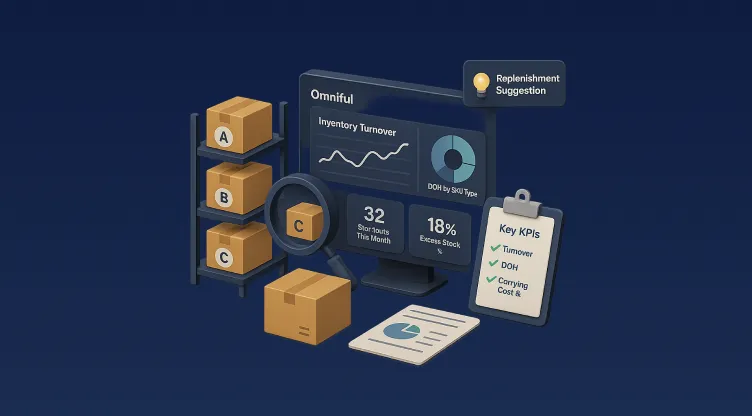
Warehouse Capacity Planning in 2026: From Storage to Strategy

Table of Contents

Share On


Introduction
Warehouse capacity planning is a practical way to manage available space by organizing how inventory, equipment, and people work together. With strategic warehouse layout and flow planning, teams can streamline operations, reduce costs, and improve customer satisfaction through faster, more reliable fulfilment.
Optimizing Strategies for Warehouse Space
Use Vertical Storage Solutions
Vertical storage solutions help maximize warehouse capacity by using the full height of the facility.
Techniques such as pallet racking, shelving, and cantilever racking create additional storage levels—boosting capacity without expanding the footprint, while improving space efficiency and accessibility.
Mezzanine floors can also add usable storage and work areas by introducing intermediate levels within the same facility. This approach is especially effective for slow-moving and low-density inventory.
Automation and Smart Storage Systems
Modern warehouse capacity planning relies on technologies such as Automated Storage and Retrieval Systems (AS/RS), conveyor systems, and RFID to improve productivity, accuracy, and space efficiency—often by reducing manual handling, travel time, and process overhead.
AS/RS automates storage and retrieval using rack-mounted cranes, shuttles, and conveyors. These systems are especially valuable in high-volume warehouses, where they can deliver:
- Better vertical space utilization through high-bay racking
- Faster product retrieval compared to manual methods
- Seamless integration with a WMS for real-time inventory visibility
Streamlining Picking and Packing Processes
Different picking methods can optimize warehouse operations depending on volume, SKU variety, and order profiles:
- Discrete picking: Item-by-item picking; simple and accurate
- Batch picking: Picks multiple SKUs in bulk for several orders
- Zone picking: Divides the warehouse into zones with assigned pickers
Wave picking combines batch and zone concepts. It groups orders into waves and organizes picking in time-based cycles to reduce travel and improve throughput—commonly used in large, complex warehouses where efficiency and accuracy must scale without increasing walking time.
These strategies help improve inventory capacity management and optimize warehouse space. Regular review and adjustment ensures they continue to align with business goals and changing demand patterns.
Common Problems in Warehouse Capacity Planning
Managing Unscheduled Surges in Demand
Seasonal peaks and viral trends can cause sudden demand spikes, making inventory planning difficult and increasing the risk of overstocking or stockouts. Because some products are steady year-round while others are highly seasonal, warehouses must prepare for short-notice peaks—especially when stock is limited and allocation decisions need to be made quickly.
Achieving Cost Efficiency with Flexibility
Space constraints often lead to cramped, disorganized storage that reduces operational efficiency. Overflows are difficult to manage, and poor handling can result in misplaced items, stock discrepancies, and challenges in measuring inventory accurately at the SKU level—directly impacting profitability.
Overcoming Data Accuracy Issues
Data accuracy issues are commonly caused by errors in input, validation, or processing. Because human decisions influence these mistakes, teams need clear guidelines and consistent training. Incomplete or missing data also reduces the reliability of analysis and planning. Strong validation protocols help detect errors early and prevent inconsistent data from spreading across systems.
Legacy System Integration
Integration challenges often show up as delays and communication failures that create bottlenecks in order fulfilment. Multi-region operations add complexity due to differing systems, customs requirements, languages, and technology standards—making synchronization harder across countries and carriers.
Change Management Challenges
Adapting workforce strategies in a fast-evolving warehouse environment is difficult. Teams must ensure the right people are in the right place at the right time—while maintaining productivity and controlling labor costs.
Effective capacity planning goes beyond maximizing square footage. It depends on organizing inventory, equipment, and staff so layout and flow improvements translate into lower costs and better service levels.
Best Practices for Warehouse Capacity Planning
Regular Review of Capacity Metrics
Monitor warehouse space usage regularly and compare it to benchmarks to identify improvement areas. Modern ERP and WMS platforms provide analytics that support data-driven decisions. Track KPIs such as:
- Space utilization rate
- Inventory turnover ratio
- Order picking accuracy
Investment in Predictive Analytics Tools
Predictive analytics can significantly improve warehouse planning by forecasting demand and optimizing stock levels. Modern warehouses are no longer storage-only—they operate as multi-functional hubs. Using predictive models helps teams streamline operations and make better decisions that improve efficiency and customer satisfaction.
Training Teams on Space Optimization Techniques
Train teams on how to use storage solutions and container sizes effectively to improve space usage while maintaining inventory organization. Regular training reduces human errors and improves picking accuracy.
Standard Operating Procedures Development
SOPs should guide teams to measure demand, identify resources, and determine required capacity for anticipated work. The human element remains critical—people are still a core resource in capacity planning.
Stakeholder Communication Strategies
Modern warehouse systems are often accessible on the go, enabling teams to view live operational data. Real-time dashboards help teams respond faster and align decisions across functions. Strong communication ensures capacity planning stays tied to customer demand—reducing excess inventory that wastes valuable space.
Conclusion
Efficient warehouse capacity planning is essential for maintaining a competitive advantage in turbulent markets. Organizations that optimize space allocation and apply advanced planning techniques can improve operational efficiency and margins.
Going forward, warehousing will increasingly depend on demand forecasting, artificial intelligence, and automation. By adopting these technologies and implementing robust capacity planning strategies, businesses can better position themselves to adapt and thrive. Solutions like Omniful can support this transformation by enabling smarter warehouse execution and continuous improvement.
Frequently Asked Questions (FAQs)
What are the best practices for optimizing warehouse space?
Vertical storage is one of the most effective ways to optimize space by using the facility’s height. Pallet racking, shelving, and cantilever racking add storage levels without expanding the footprint—improving accessibility and reducing operational costs.
How do you calculate warehouse capacity?
To calculate warehouse capacity:
- Measure the total square footage of the warehouse facility
- Estimate space used for non-storage areas (offices, restrooms, break rooms, loading zones)
- Subtract non-storage space from total square footage to determine usable storage space
What role does technology play in warehouse capacity planning?
Technologies such as IoT, sensors, and RFID enable real-time inventory tracking and visibility. This improves space utilization, reduces search time, and helps prevent overstocking by maintaining more accurate inventory data.
How do warehouses handle seasonal variations in demand?
During peak seasons, warehouses often rent temporary overflow space to manage increased demand without long-term investment. This reduces the risk of stockouts while avoiding permanent capacity costs that may not be needed year-round.
Share On