Order Processing Automation: Faster Fulfillment with OMS

Table of Contents

Share On


Order Processing Automation: Faster Fulfillment with OMS
Summary
Order processing automation is transforming modern logistics by enabling faster, more accurate, and scalable fulfillment operations. Powered by advanced Order Management Systems (OMS) and integrated with transportation management systems (TMS), automation eliminates manual workflows, reduces errors, and accelerates order execution.
In 2026, businesses rely on automation to handle increasing order volumes while maintaining high service levels. Automated systems manage order routing, inventory allocation, carrier selection, and shipment tracking in real time. This significantly improves key logistics KPIs, including on-time delivery, order accuracy, and processing speed.
This guide explains how order processing automation works, how OMS and TMS integration enhances fulfillment performance, and how businesses can implement automation to improve operational efficiency and customer satisfaction.
What is Order Processing Automation
Order processing automation refers to the use of software systems—primarily Order Management Systems (OMS)—to automate the entire lifecycle of an order, from order creation to final delivery.
Instead of relying on manual workflows, automation ensures that:
- Orders are processed instantly
- Inventory is allocated automatically
- Fulfillment decisions are optimized
- Shipping is coordinated in real time
Core Workflow of Automated Order Processing
Order Capture → Validation → Inventory Allocation → Order Routing → Warehouse Processing → Carrier Assignment → Shipment Dispatch
Each step is handled automatically through system integrations.
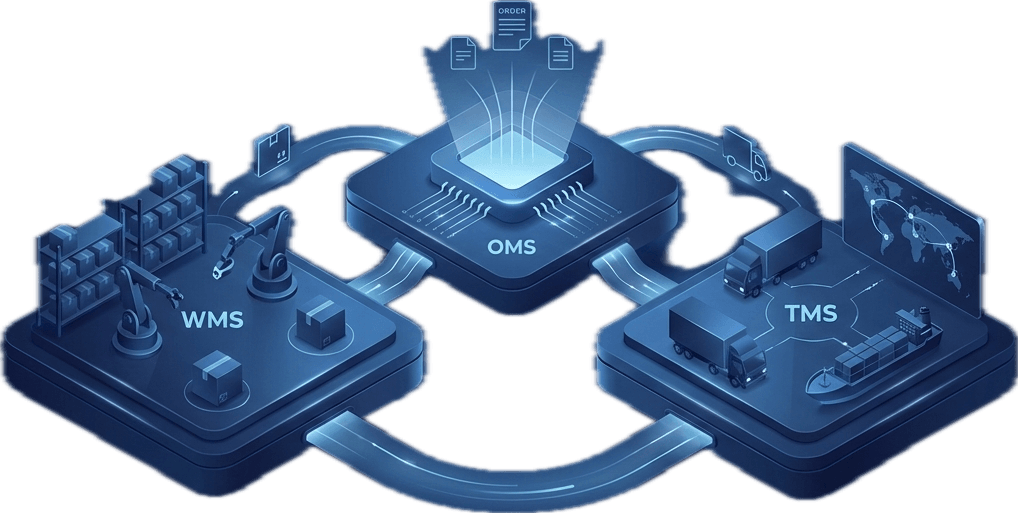
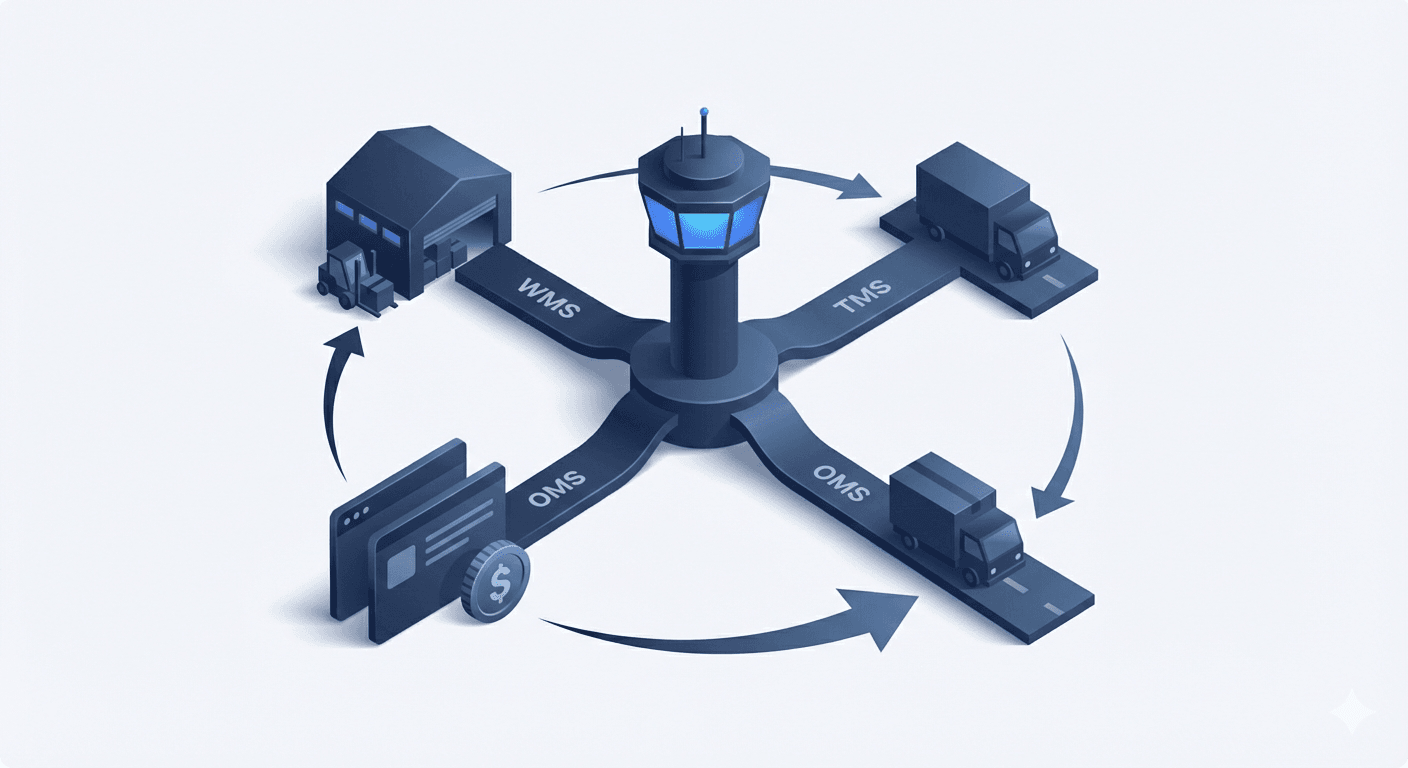
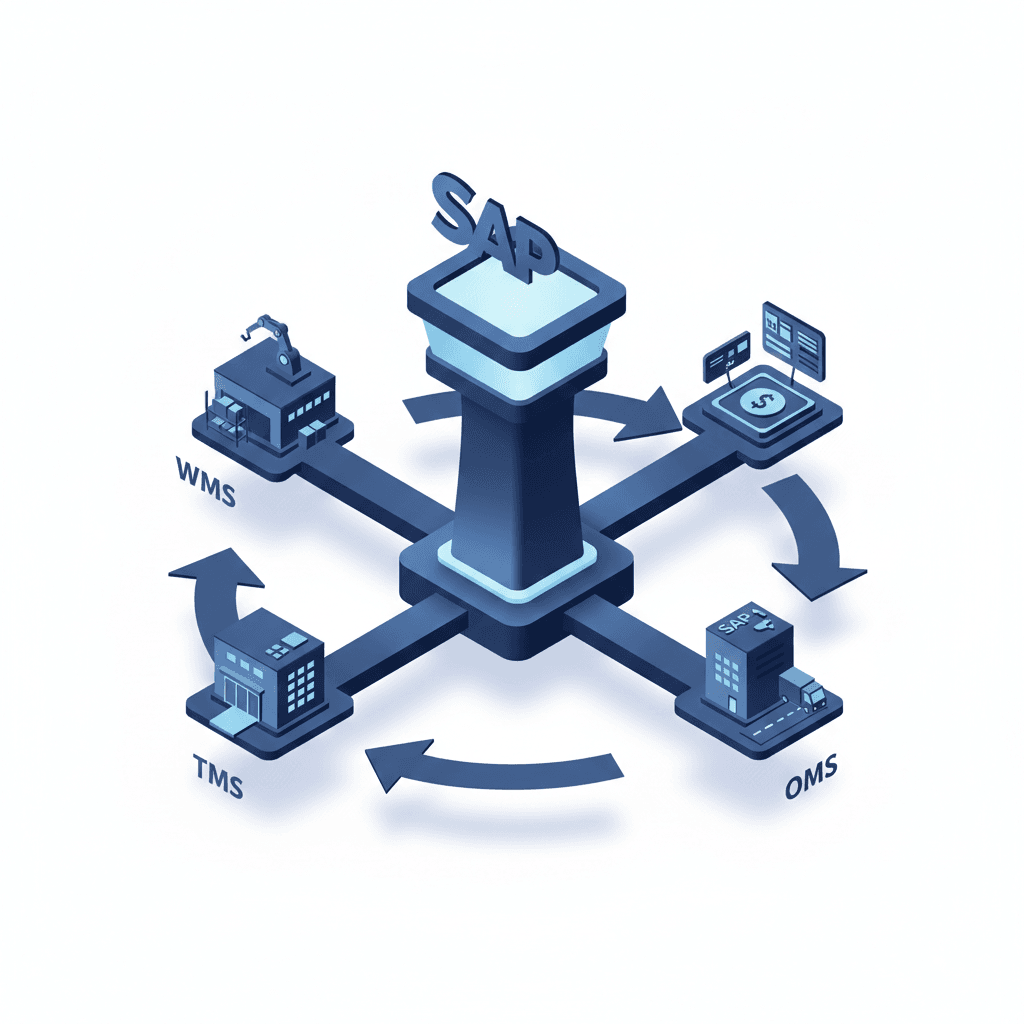
Systems Involved in Order Automation
Modern order processing automation typically involves:
- OMS (Order Management System)
- WMS (Warehouse Management System)
- Transportation Management System (TMS)
- Carrier integrations
- Customer communication platforms
Together, these systems enable seamless and efficient fulfillment operations.
Why Order Processing Automation is Important
In today’s high-volume logistics environment, manual order processing is no longer sustainable.
Challenges with Manual Order Processing
- Delayed order processing
- High error rates
- Inefficient inventory allocation
- Poor visibility into fulfillment status
- Increased operational costs
Automation solves these challenges by improving both speed and accuracy.
Key Benefits of Order Processing Automation
| Benefit | Impact |
|---|---|
| Faster Order Processing | Reduces processing time significantly |
| Improved Accuracy | Minimizes manual errors |
| Better Inventory Allocation | Ensures optimal stock usage |
| Enhanced Visibility | Real-time tracking of orders |
| Scalability | Handles large order volumes efficiently |
These improvements directly impact logistics performance metrics.
How OMS Improves Fulfillment Speed
An Order Management System (OMS) acts as the central control layer for order execution.
Key OMS Capabilities
- Automated order validation
- Intelligent order routing
- Real-time inventory allocation
- Multi-channel order management
- Integration with fulfillment systems
Example: Automated Order Routing
When an order is placed, OMS automatically decides:
- Which warehouse should fulfill the order
- Whether to split the order across locations
- Which fulfillment method to use
This reduces processing delays and improves on-time delivery KPI performance.
OMS and Transportation Management System (TMS) Integration
Integration between OMS and transportation management systems (TMS) is critical for end-to-end automation.
What Happens in OMS-TMS Integration
Once an order is ready for shipment:
- OMS sends shipment data to TMS
- TMS selects the best carrier
- Shipping labels are generated
- Shipment tracking begins
Benefits of OMS-TMS Integration
| Capability | Benefit |
|---|---|
| Carrier Selection | Optimized based on cost and performance |
| Real-Time Tracking | Improved shipment visibility |
| Delivery Optimization | Faster and more reliable deliveries |
| Analytics Integration | Better decision-making |
This integration improves carrier performance analytics and delivery efficiency.
Key Features of Order Processing Automation
1. Automated Order Routing
Orders are automatically routed to the best fulfillment location based on:
- Inventory availability
- Warehouse proximity
- Delivery timelines
2. Inventory Allocation Automation
OMS automatically allocates stock based on:
- SKU availability
- Demand patterns
- Warehouse capacity
This reduces stockouts and improves order accuracy.
3. Carrier Selection Optimization
Through TMS integration, systems automatically select carriers based on:
- Delivery performance
- Cost efficiency
- Service level agreements
This supports supply chain carrier evaluation.
4. Real-Time Order Tracking
Customers and operations teams can track orders in real time.
This improves transparency and customer satisfaction.
5. Automated Notifications
Automation enables communication such as:
- Order confirmation
- Shipment updates
- Delivery notifications
6. Logistics Analytics and Reporting
Modern systems provide insights into:
- Order processing times
- Delivery performance
- Carrier reliability
These insights improve TMS reporting and analytics.
Step-by-Step Guide to Implement Order Processing Automation
Step 1: Implement an OMS Platform
Start by deploying an OMS that supports automation capabilities.
Key features to look for:
- Multi-channel order management
- Real-time inventory tracking
- Automation workflows
Step 2: Integrate Warehouse Systems
OMS should integrate with WMS for:
- Inventory updates
- Picking and packing operations
- Order status tracking
Step 3: Connect Transportation Systems
Integrate OMS with a transportation management system (TMS).
This enables:
- Carrier selection
- Shipment tracking
- Delivery optimization
Step 4: Automate Order Workflows
Define automation rules for:
- Order routing
- Inventory allocation
- Shipment processing
Step 5: Enable Real-Time Tracking
Ensure customers and operations teams have access to tracking information.
Step 6: Monitor Logistics KPIs
Track performance metrics such as:
- On-time delivery KPI
- Order accuracy rate
- Processing time
Logistics KPIs Improved by Automation
Automation directly impacts key logistics KPIs.
Key Metrics
| KPI | Description |
|---|---|
| On-Time Delivery KPI | Percentage of orders delivered on time |
| Order Processing Time | Time taken from order creation to dispatch |
| Order Accuracy Rate | Percentage of error-free orders |
| Carrier Performance | Reliability of delivery partners |
| Freight Invoice Accuracy | Accuracy of shipping cost calculations |
These metrics define operational success in logistics KPIs 2026.
Order Processing Automation in MENA Logistics
In regions like MENA, logistics complexity is increasing due to:
- Cross-border shipping
- Multi-carrier networks
- High e-commerce demand
Businesses use transportation analytics MENA platforms to:
- Optimize delivery performance
- Improve carrier selection
- Enhance fulfillment speed
Automation is essential for scaling operations in these markets.
Best Practices for Order Processing Automation
Automate End-to-End Workflows
Automation should cover the entire order lifecycle.
Use Data-Driven Decision Making
Leverage analytics to improve:
- Inventory allocation
- Carrier selection
- Delivery planning
Ensure System Integration
OMS, WMS, and TMS must work together seamlessly.
Monitor Performance Continuously
Track KPIs and optimize workflows regularly.
Common Mistakes in Order Automation
Partial Automation
Automating only parts of the workflow limits efficiency gains.
Poor System Integration
Disconnected systems lead to delays and errors.
Ignoring Analytics
Without analytics, businesses cannot optimize performance.
Lack of Scalability Planning
Automation systems should support future growth.
Expert Tips for Faster Fulfillment
Optimize Order Routing Logic
Use advanced rules for order routing.
Use Predictive Analytics
Predict demand and optimize inventory placement.
Continuously Improve Carrier Selection
Analyze carrier performance regularly.
Focus on Customer Experience
Automation should improve delivery transparency and reliability.
Conclusion
Order processing automation is a critical component of modern logistics operations. By leveraging OMS platforms and integrating with transportation management systems (TMS), businesses can significantly improve fulfillment speed, accuracy, and scalability.
Automation reduces manual errors, improves on-time delivery KPI performance, and enhances overall logistics performance metrics. It enables businesses to process orders faster, optimize delivery operations, and provide better customer experiences.
In 2026, companies that invest in automation will gain a competitive advantage by improving efficiency, reducing costs, and scaling fulfillment operations seamlessly.
Share On