TMS Freight Broker Integration in 2026: Smarter LTL and Spot Rate Logistics in MENA

Table of Contents

Share On


Fast Freight Facts (Quick Glance Summary)
- Freight brokers connect shippers with LTL carriers for flexible shipping.
- A Transportation Management System (TMS) simplifies broker integration.
- TMS boosts real-time visibility, rate comparison, and load tracking.
- LTL and spot rates are vital for MENA’s cost-sensitive freight market.
- Seamless TMS-broker collaboration cuts delays and improves margins.
Introduction: Why Freight Broker Integration Matters Today
The logistics world is more dynamic than ever. As e-commerce expands across MENA, businesses are forced to move faster, cheaper, and smarter. For freight operations—especially in less-than-truckload (LTL) or spot shipping—the role of freight brokers becomes critical.
However, managing broker communications, pricing, and execution through phone calls or emails belongs in the past. In today’s digital environment, your Transportation Management System (TMS) must be the bridge between your business and brokers. This blog explores how TMS-broker integration revolutionises LTL and spot-rate logistics, especially in the competitive and fast-growing markets of the GCC.
The Role of Freight Brokers in MENA Logistics
Freight brokers act as matchmakers. They connect shippers with available carriers. For shipments that don’t fill a truck (LTL) or those that need last-minute booking (spot rates), brokers offer flexibility and access to competitive pricing. In the fragmented freight market across Saudi Arabia, the UAE, and Egypt, brokers are especially useful for:
- Consolidating loads to reduce costs
- Finding niche or regional carriers
- Negotiating competitive pricing during high-demand seasons
These advantages can quickly fade if the process is manual or lacks transparency. That’s where TMS integration makes a difference.
Understanding TMS Freight Broker Integration
What is TMS?
A Transportation Management System (TMS) is a platform that helps companies plan, execute, and optimise freight movements. Modern platforms like Omniful’s TMS typically support:
- Route optimisation
- Vehicle and driver assignment
- Real-time tracking of shipments
- Freight cost management
What is Freight Broker Integration?
TMS freight broker integration connects your TMS with external broker platforms or networks through APIs. This enables:
- Instant load booking
- Live spot-rate comparison
- Real-time status updates from carriers
Instead of managing spreadsheets and emails, logistics teams can run broker workflows from a single dashboard.
Benefits of Broker Integration in Your TMS
Real-Time Rate Visibility
Integration gives immediate access to spot-rate quotes. You can view, compare, and choose cost-effective and time-efficient options from within your TMS.
Why it matters in MENA: Rates can fluctuate due to port congestion, demand spikes, or cross-border constraints. With real-time updates, businesses can respond faster.
Faster Load Matching
Manual booking creates delays and missed pickup windows. Integration enables automated load tendering to brokers, reducing turnaround time.
Enhanced Shipment Tracking
Track each LTL shipment through the broker or carrier system, synchronised into your TMS dashboard—so you always know where shipments are and when they will arrive.
Improved SLA Performance
With better visibility and clearer broker accountability, businesses can meet delivery SLAs more consistently and reduce customer complaints.
Broker Integration Use Case: Spot Rates vs LTL in MENA
Spot Rate Scenario
A cosmetics brand in Dubai receives an urgent bulk order from Kuwait. Full-truckload is too expensive and slow to arrange. With TMS-broker integration, the logistics manager compares real-time spot rates, selects the best option, and dispatches within hours.
Result: Delivery meets SLA, costs are optimised, and no manual calls are required.
LTL Scenario
A fashion retailer in Riyadh ships to multiple franchise stores across the Kingdom. Using a TMS, the logistics team connects with regional LTL brokers who consolidate shipments going to the same city.
Result: Lower cost per shipment and better vehicle capacity utilisation.
Importance of LTL in MENA’s Growing E-commerce Market
In MENA, full-truckload capacity is often underutilised due to:
- High logistics costs in urban areas
- Multi-stop delivery routes
- Increasing demand for express and smaller orders
LTL enables:
- Lower freight costs
- More flexible delivery options
- Reduced environmental impact through shared loads
Integration-Driven Logistics: Key Functionalities to Look For
When choosing a TMS for broker integration, ensure the system includes:
- Automated spot-rate bidding: Send load details to multiple brokers and receive quotes quickly
- Trip clustering & route optimisation: Group similar shipments to maximise LTL efficiency
- Real-time carrier selection: Choose based on speed, cost, SLA history, or route preference
- Shipping rules automation: Select brokers automatically by delivery type, weight, size, or location
- Live tracking dashboard: Consolidate tracking across multiple carriers in one place
Learn how Omniful’s TMS supports these workflows
Freight Broker Integration for Last Mile & Hyperlocal Delivery
Last-mile logistics is often unpredictable in cities like Riyadh, Cairo, and Dubai. Integrated broker access in a TMS can help with:
- Same-day local delivery using third-party fleets
- Real-time rerouting during traffic congestion
- Managing cash collection and reverse logistics
Omniful’s TMS supports last-mile delivery and hyperlocal operations by automating driver assignment and clustering deliveries for dense service areas.
Explore Omniship for enhanced delivery control
Enhancing Inventory and Warehouse Visibility Through TMS Integration
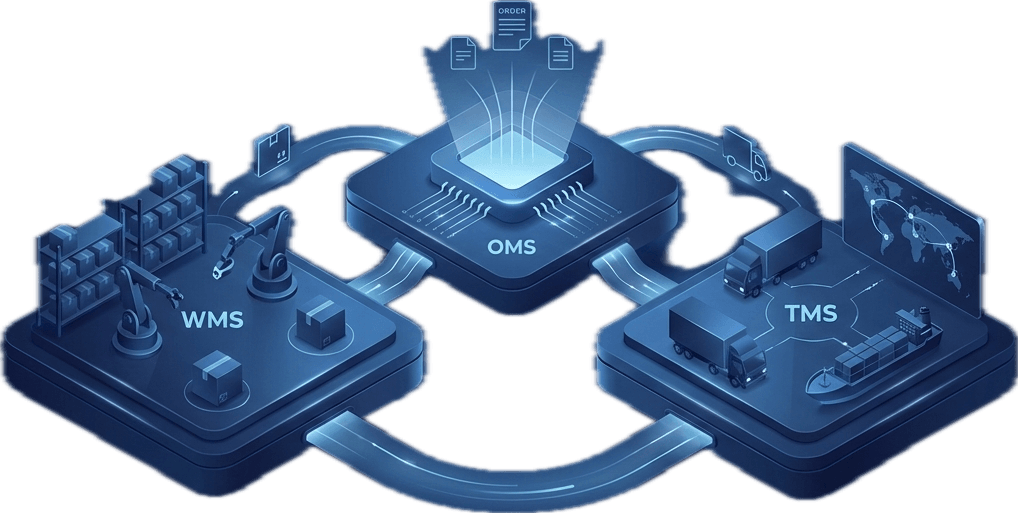
A modern TMS should not operate in isolation. When integrated with a Warehouse Inventory Management System, it enables:
- Synchronized inventory visibility for outbound orders
- Real-time stock availability updates
- Faster replenishment triggers when demand spikes due to accelerated shipping
This end-to-end visibility reduces missed deliveries caused by stockouts or overcommitments.
How Omniful Powers Seamless Freight Broker Integration
Omniful’s TMS is built with plug-and-play integration in mind. It supports:
- API-based broker connections: For fast broker communication and load updates
- Multi-sales-channel integrations: Works with Shopify, WooCommerce, Zid, and more
- Custom delivery zones: Improve broker selection by region and coverage
- Rules-based automation: Assign brokers by weight, location, service type, or SLA
- Returns automation: Support reverse logistics when deliveries fail
Try our plug-and-play integrations
Why Freight Brokers Still Matter in a Digitised Supply Chain
Some may ask, “Why not work directly with carriers?” The answer is flexibility.
Freight brokers offer:
- Aggregated access to many carriers
- Competitive bidding environments
- Risk sharing through SLAs and accountability clauses
In a region as diverse as MENA, where routes and infrastructure vary by country, brokers remain valuable intermediaries.
Final Thoughts: Make the Most of Your TMS
Freight management is no longer just about booking a truck—it’s about real-time decisions, flexible networks, and integrated systems.
By connecting your TMS with freight brokers, you unlock:
- Better cost control
- Faster fulfilment
- Stronger delivery performance
In a world driven by speed and customer satisfaction, broker integration isn’t optional—it’s essential.
Frequently Asked Questions (FAQs)
What is the difference between LTL and spot rate shipping?
LTL involves shared truck space for planned or regular routes. Spot rates apply to urgent, one-time shipments priced based on real-time availability and demand.
How does broker integration reduce logistics costs?
It enables faster rate comparison and selection of the best available option, reducing overpricing and eliminating manual overhead.
Can Omniful’s TMS support integrations with regional brokers in MENA?
Yes. Omniful supports broker integration via APIs and can work with local and cross-border broker workflows across Saudi Arabia, the UAE, Egypt, and more.
Does broker integration improve delivery SLA compliance?
Yes. Real-time visibility, automated selection, and faster load tendering reduce delays and lower the risk of missed SLAs.
Share On